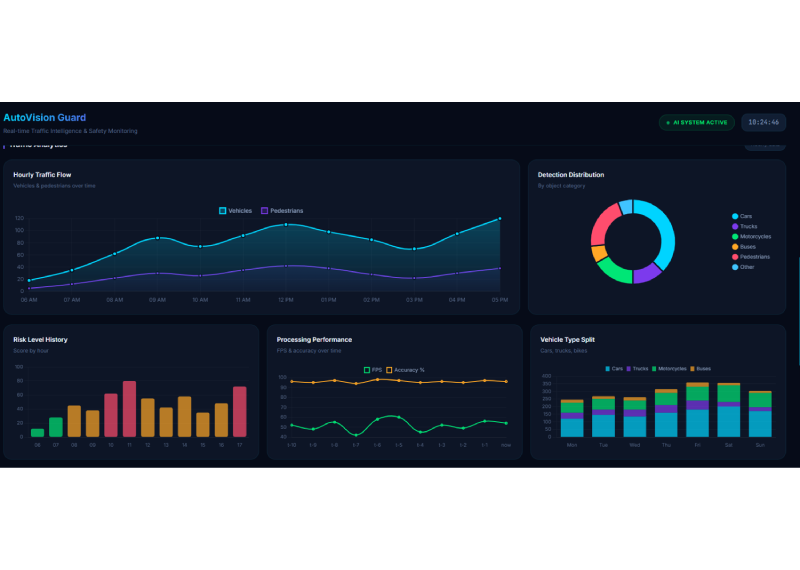
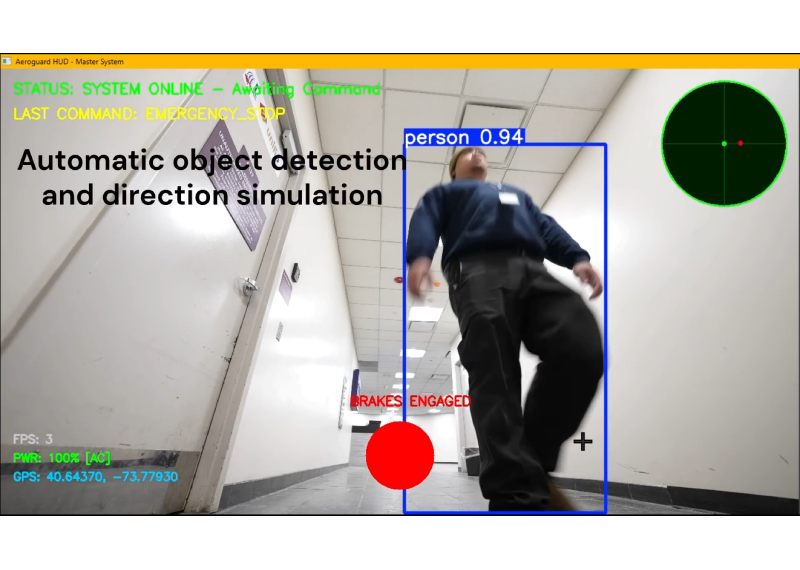
Problem Statement: Airport ground operations continue to rely heavily on manual visual inspections to detect Foreign Object Debris (FOD) and misplaced luggage on the runway and tarmac. These inspections are labor-intensive, time-consuming, and susceptible to human error, increasing the risk of aircraft damage, operational delays, and safety incidents. Although Autonomous Ground Vehicles (AGVs) present a promising solution for automated runway monitoring, deploying untested robotic
Tools used: Python, Streamlit, Yolo, Machine learning, CV, NLP
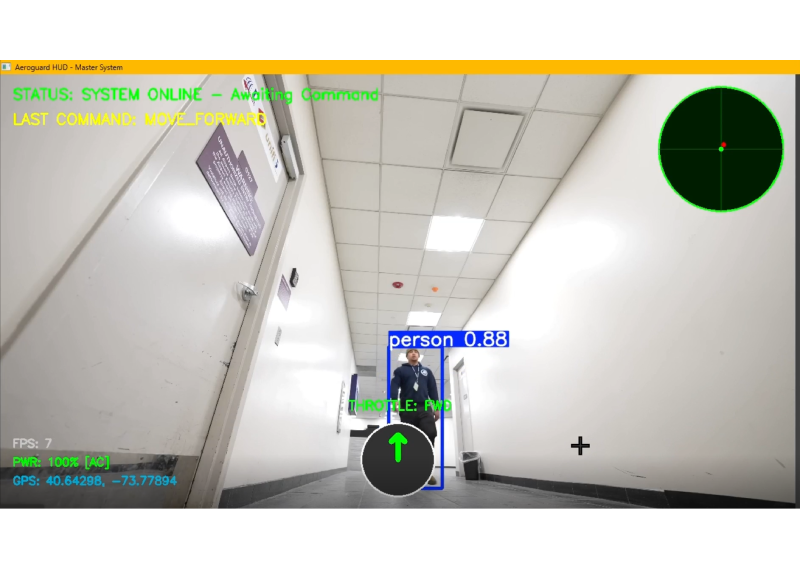
Objective: AeroGuard is an autonomous AI-powered system designed for Foreign Object Debris (FOD) and obstacle detection on airport runways. The project aims to enhance aviation safety by continuously monitoring runways and identifying hazardous objects that could pose a risk to aircraft during takeoff, landing, or taxiing. By leveraging advanced computer vision, deep learning, and sensor
Insights: AeroGuard addresses one of the most critical challenges in aviation—Foreign Object Debris (FOD) and obstacle detection on airport runways. FOD poses a significant threat to aircraft safety, potentially causing engine damage, flight delays, costly repairs, and operational disruptions. By enabling early and accurate detection of hazardous objects, AeroGuard helps minimize safety risks, reduce maintenance expenses, and enhance overall airport operations.
Innovation: The system leverages artificial intelligence, computer vision, and autonomous monitoring to automate runway inspections, significantly reducing dependence on manual visual checks. This approach improves detection accuracy, enables continuous real-time surveillance, and enhances operational efficiency.
Impact: AeroGuard has the potential to strengthen aviation safety standards by preventing FOD-related incidents, reducing aircraft downtime, minimizing flight delays, and lowering maintenance and operational costs for airports and airlines. Its real-time alerting capability supports faster decision-making and more effective runway management.
Scalability: Although designed primarily for airport runway monitoring, the underlying AI-driven detection framework is highly adaptable. The system can be deployed in industrial facilities, logistics hubs, ports, warehouses, railway infrastructure, and other safety-critical environments where continuous obstacle detection and autonomous monitoring are essential.
Problem Statement: Vehicle service centers rely on manual booking systems that are inefficient and error-prone. This project aims to develop an automated booking system to accurately capture customer and vehicle details, reduce manual work, generate unique booking IDs, and provide instant confirmation.
Tools used: Microsoft Copilot Studio, Microsoft Power Automate, Microsoft PowerApps
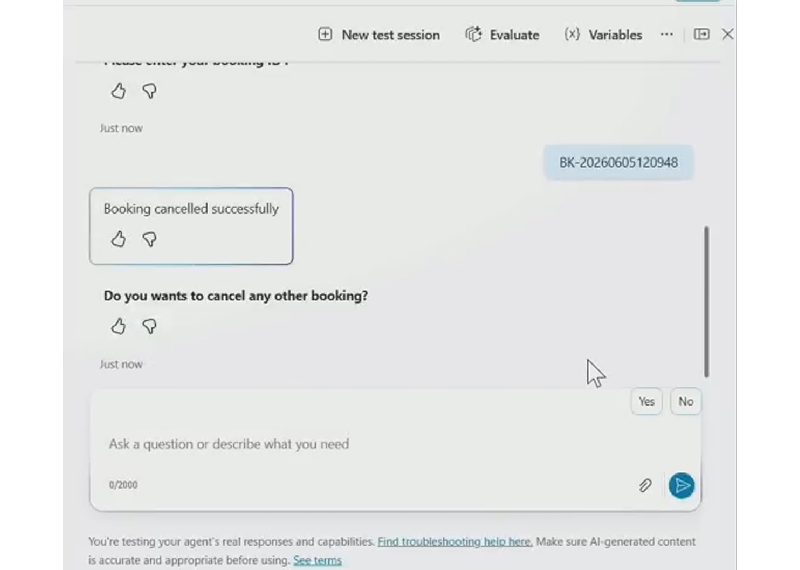
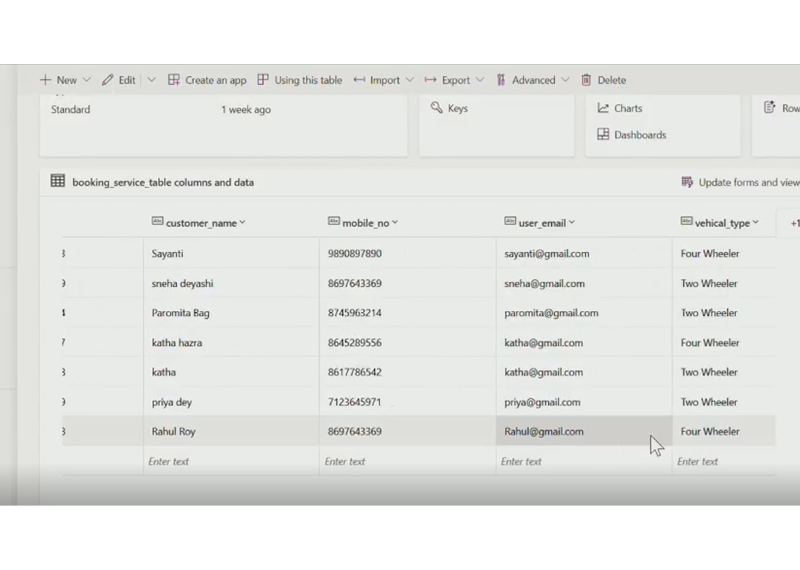
Objective: Developed an AI-powered Vehicle Service Booking Chatbot using Microsoft Copilot Studio, Power Automate, and Dataverse (Power Apps). The chatbot enables users to book vehicle service appointments, validate user inputs, store booking details, retrieve booking information, and cancel bookings based on business rules.
Key Features
Insights: 1. Automated the complete service booking lifecycle through conversational AI.
2. Reduced manual intervention by integrating chatbot workflows with Dataverse.
3. Implemented input validation and business logic to improve data accuracy.
4. Demonstrated seamless integration between Copilot Studio, Power Automate, and Power Apps for enterprise automation.
5. Improved user experience through instant booking, booking lookup, and cancellation services.
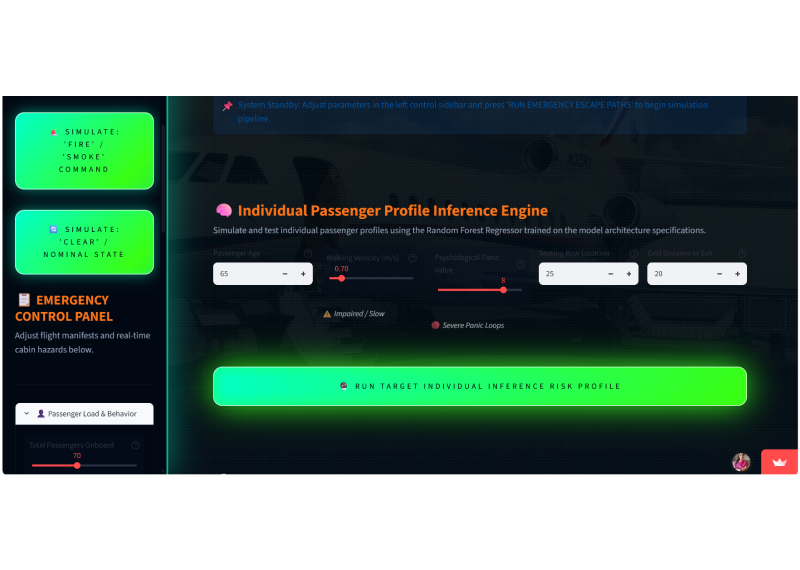
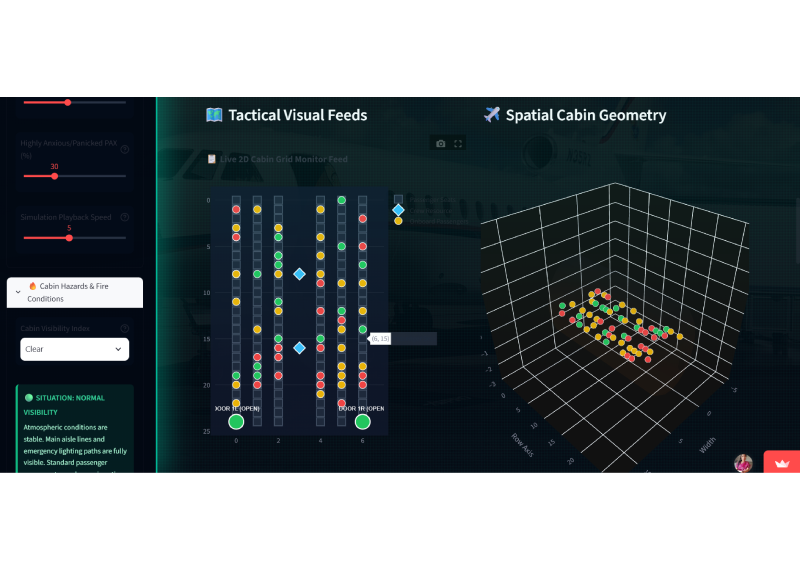
Problem Statement: Aircraft emergency evacuations face serious risks due to cabin layout bottlenecks, poor accessibility for elderly and disabled passengers, and ineffective handling of blocked exits. Passenger panic reduces compliance with crew guidance, further delaying evacuations. Current simulation-based tests fail to reflect real-world behavior. These issues make it difficult to consistently meet the mandatory 90-second evacuation standard.
Tools used: Python, Machine learning, Streamlit, NLP,
Objective: This project aims to analyze passenger movement during aircraft emergency evacuations to identify bottlenecks and safety gaps. It focuses on simulating realistic emergency scenarios and optimizing cabin layouts, evacuation procedures, and exit strategies to reduce evacuation time. The study emphasizes inclusivity by improving evacuation support for elderly and mobility-
Insights: Traditional evacuation models are static and fail to adapt to real-time emergencies.
Integrating AI and dynamic rerouting enhances responsiveness to obstacles like fire or smoke.
Incorporates realistic modeling of crowd behavior and accessibility for vulnerable passengers.
Improves safety compliance, reduces evacuation time, and sets a foundation for smarter emergency management systems.
Problem Statement: Solar power generation is highly dependent on changing weather conditions, making it challenging to accurately predict energy output. Traditional forecasting methods often fail to capture complex weather patterns, leading to inaccurate predictions and inefficient energy management. An intelligent machine learning-based forecasting system is required to analyze meteorological data and provide reliable hourly solar power predictions, enabling better planning, grid stability, and efficient
Tools used: Python, Machine Learning, Streamlit
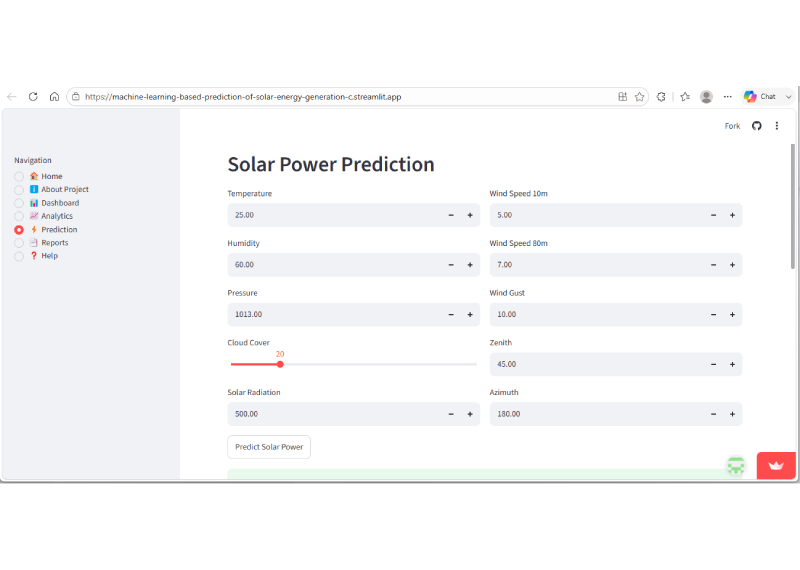
Objective: The objective of this project is to develop a machine learning-based solar power forecasting system that accurately predicts the hourly power output of a photovoltaic power station using meteorological data. The system aims to improve prediction accuracy, support efficient energy management and planning, and enable reliable utilization of solar energy by leveraging advanced data
Insights: The project demonstrates an interactive machine learning-based prediction system where users can input weather-related parameters through a simple interface. The model processes these inputs to estimate the hourly power output of a photovoltaic power station with high accuracy. This intelligent forecasting solution assists in better energy management, improves decision-making, and promotes the efficient utilization of renewable solar energy.
Problem Statement: Water leakage causes significant water wastage and is often detected late due to lack of awareness and real-time information. Users do not have an easy way to understand leakage issues and take timely action.
Tools used: Microsoft Copilot Studio, Conversational AI
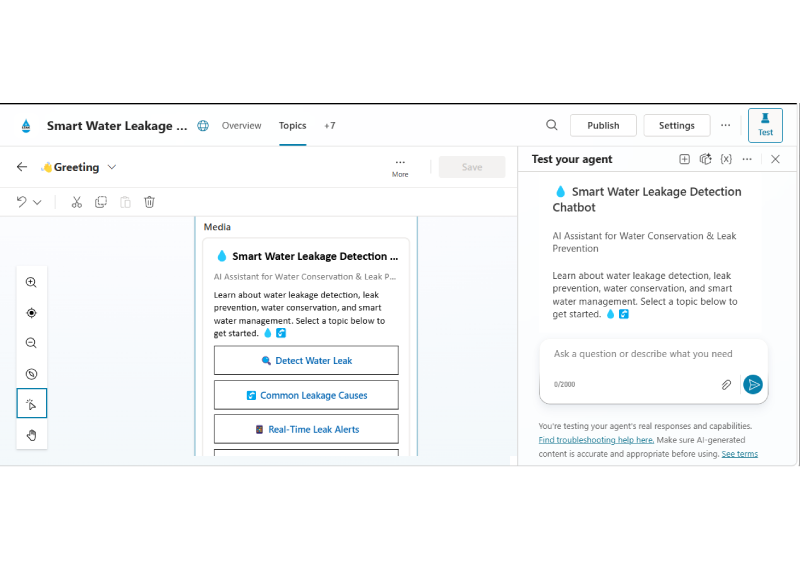
Objective: To develop an intelligent chatbot using Microsoft Copilot Studio that helps users identify, understand, and respond to water leakage issues through an interactive conversational interface. The chatbot provides timely information, guidance, and awareness to support early detection of leaks, promote efficient water usage, and reduce water wastage by encouraging users to take appropriate corrective actions.
Insights: The project demonstrates an AI-powered chatbot developed using Microsoft Copilot Studio that interacts with users to address water leakage-related queries. Users can describe leakage issues or ask questions, and the chatbot provides relevant information, possible causes, and recommended actions. The chatbot offers instant guidance through a conversational interface, making it easier for users to understand and respond to water leakage problems. This solution promotes water conservation by encouraging timely awareness and informed decision-making.
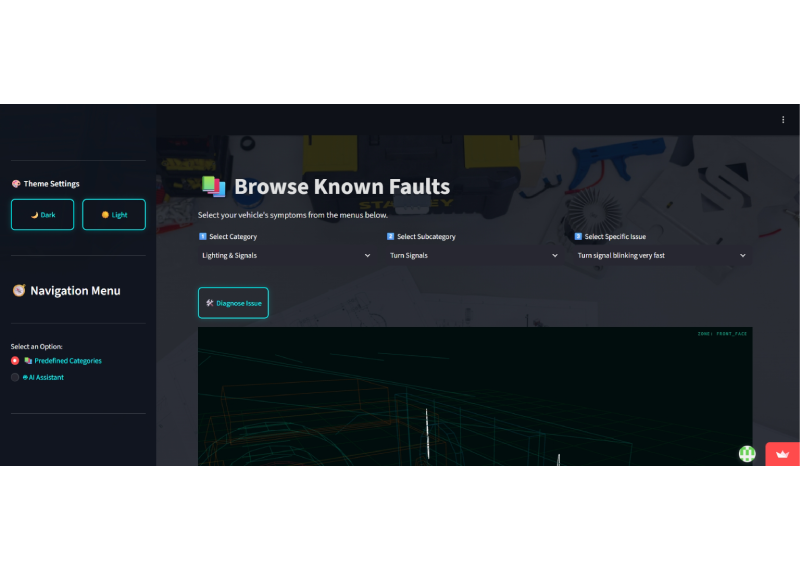
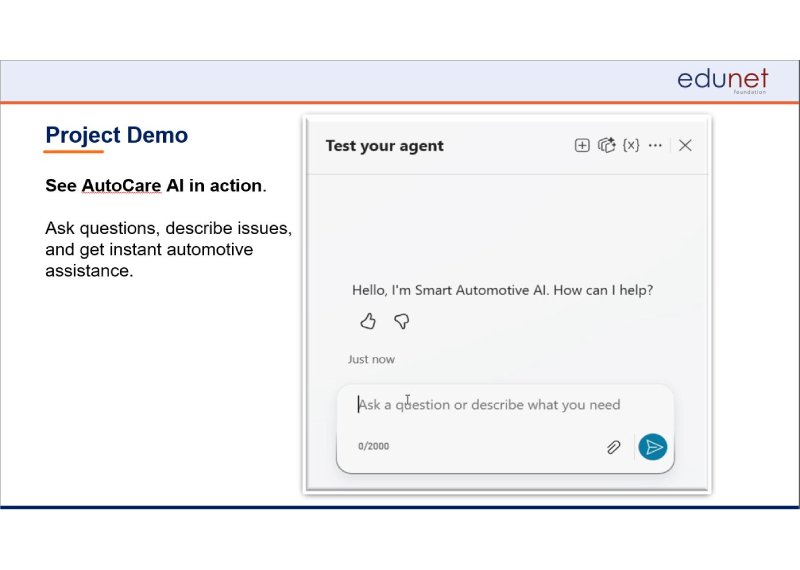
Problem Statement: Modern vehicles exhibit various observable symptoms such as abnormal noise, excessive vibration, smoke emissions, starting issues, and reduced performance. Identifying the exact cause of these faults requires technical expertise, and incorrect diagnosis can result in unnecessary repairs, increased costs, and safety risks. Traditional diagnostic approaches rely on manual inspection or fixed rule-based systems, which are often time-consuming and lack the ability to adapt to complex and varying fault patterns.
Tools used: Python, NumPy, Pandas, Seaborn, Scikit-learn (Sklearn), TensorFlow, GenAI API Keys, Streamlit
Objective: The primary objective is to democratize automotive diagnostics by translating complex fault codes into 5th-grade-level instructions, thereby replacing confusing internet searches with a single, safe source of truth that minimizes driver anxiety during breakdowns. Achieving this relies on a hybrid engine that uses strict prompt architecture to force Google Gemini into a structured JSON output, ensuring the AI never offers unsafe free-form advice but instead clearly dictates tool
Insights: A critical insight is that this strict formatting serves as the ultimate safeguard, transforming the AI from a conversational chatbot into a rigid compliance checker that prioritizes user safety over creativity. Furthermore, the self-healing data persistence loop turns the application into a living document, where every AI interaction enriches the core dataset to handle real-world edge cases over time, effectively crowdsourcing the system's intelligence.
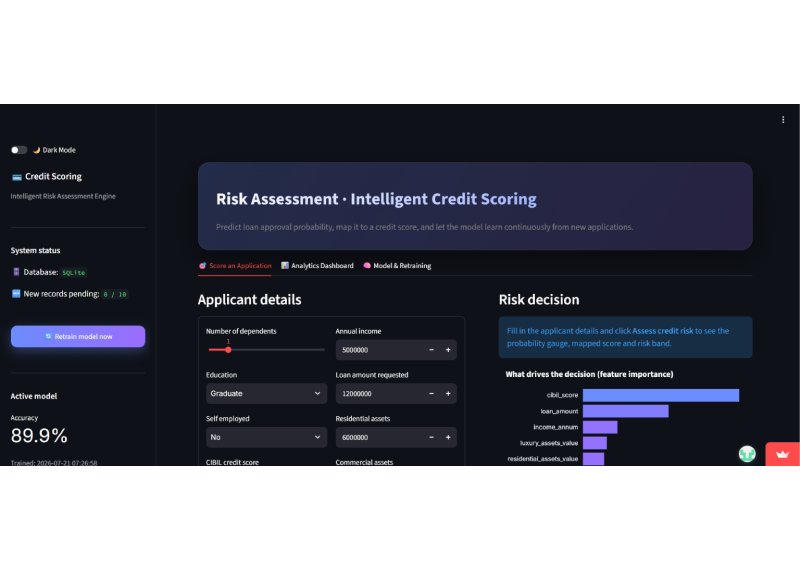
Problem Statement: Banks, NBFCs, and fintech apps struggle to determine who will repay a loan on time and who might default, leading to financial losses and operational risks. Limitations of traditional credit scoring:
• Relies heavily on historical credit data (credit bureau, past loans).
• Fails for people with thin or no credit history.
• Cannot capture complex financial and behavioral patterns of modern borrowers.
• Human analysis or simple rule-based systems cannot accurately model these patterns.
Tools used: Python, Pandas, NumPy, Scikit-learn, Matplotlib/ Seaborn, TensorFlow
Objective: The primary objective is to design and deploy a robust AI/ML pipeline that ingests both traditional financial indicators and alternative behavioral data points to generate a dynamic, predictive default risk score. A core goal is to ensure the system surpasses the accuracy of conventional models, particularly for thin-file and no-file borrowers, by identifying non-obvious risk signals from their transactional or digital footprints.
Insights: The insight is that behavioral data—such as spending consistency, utility payment patterns, and digital engagement—often serve as stronger predictors of repayment behavior for new-to-credit populations than traditional credit bureau histories, effectively democratizing credit access. The implementation of explainability techniques will likely reveal that the model relies less on demographic proxies and more on actionable financial habits, which not only mitigates bias but also empowers borrowers with clear guidance on how to improve their scores.
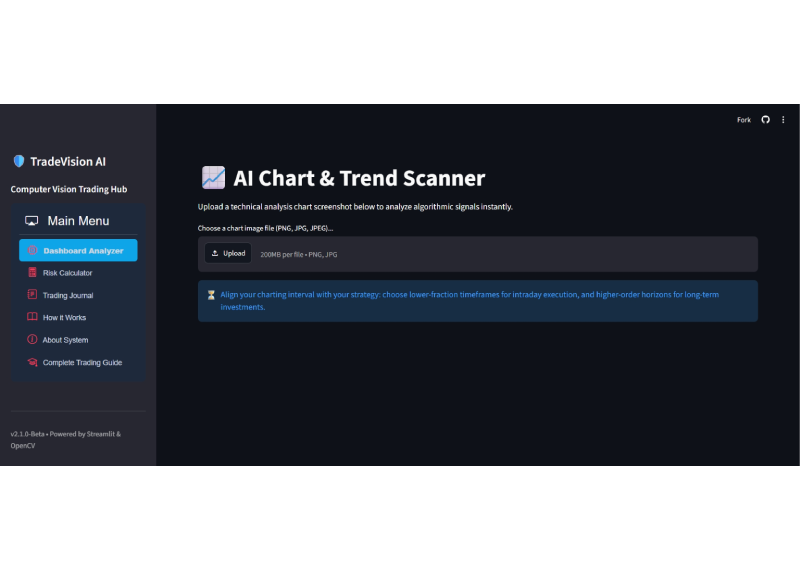
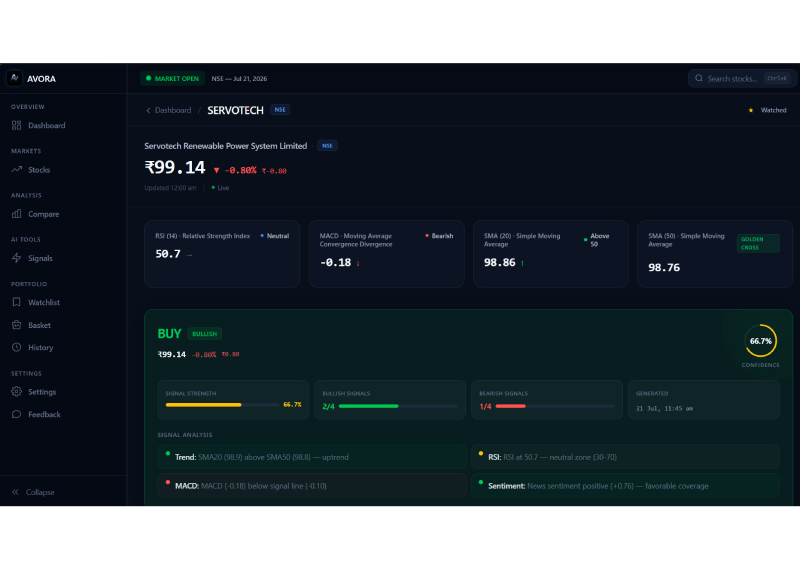
Problem Statement: Intraday stock trading requires rapid and accurate decision-making under volatile market conditions. Traditional trading strategies often rely on manual analysis of historical data and technical indicators, which can be subjective, time-consuming, and prone to human error. There is a need for an automated, data-driven trading system that can:
• Predict short-term price movements with high accuracy
• Generate reliable buy/sell/hold signals
• Integrate risk management protocols
• Utilize both technical and advanced market data (such as order blocks, liquidity gaps,
Tools used: Python, Numpy, Pandas, Matplotlib, Seaborn, Sklearn, Tensorflow, Streamlit
Objective: The primary objective of this AI platform is to eliminate information overload and decision paralysis by transforming complex chart analysis into a single, actionable BUY/SELL signal derived from a simple screenshot upload. It aims to drastically reduce the time spent on manual market research, ensuring traders can capture fleeting opportunities before they vanish. Furthermore, the platform is designed to democratize trading by embedding risk management directly into the
Insights: The true power of this solution lies not just in prediction accuracy, but in the behavioral shift it creates—by compressing hours of analysis into milliseconds, it effectively replaces reactive panic with proactive, data-backed calmness, which is the cornerstone of profitable trading. The screenshot-based interface is a strategic masterstroke because it meets users exactly where they are, eliminating the learning curve of new software and leveraging the visual pattern-recognition strengths of AI to bridge the gap between raw price action and strategic decision-making.
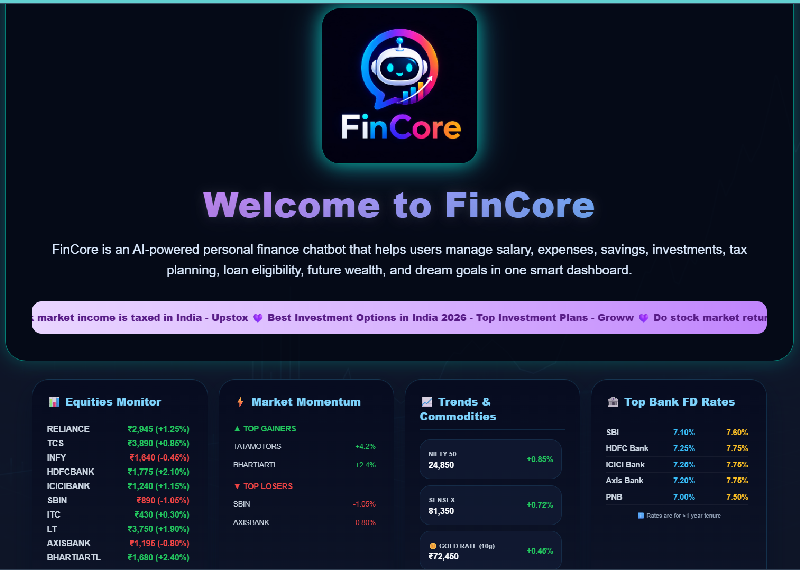
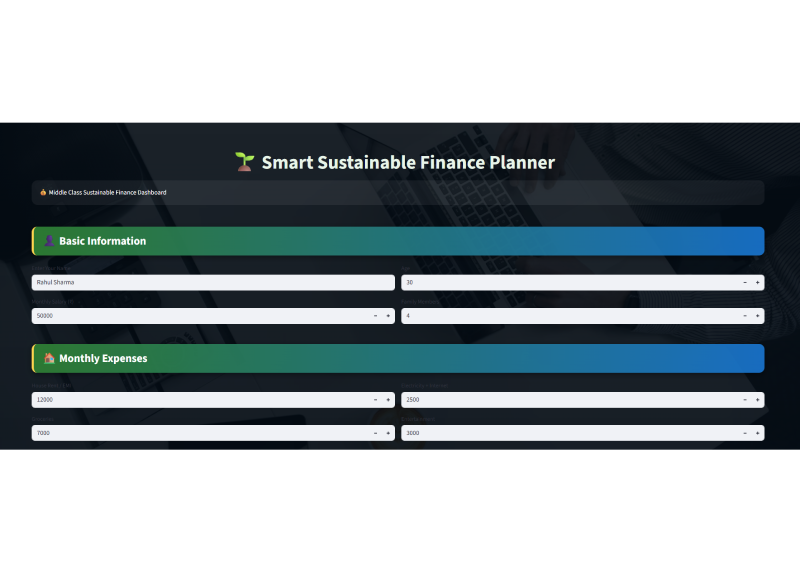
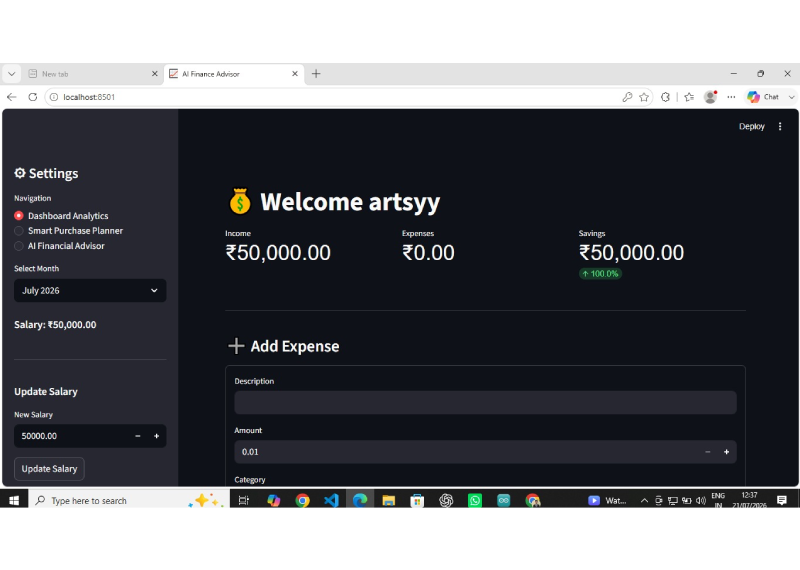
Problem Statement: Young professionals often struggle to manage their income effectively due to limited financial knowledge, leading to unplanned spending instead of structured savings. Existing tools lack simplicity and personalization for beginners. This project focuses on intelligently segregating income into expenses, savings, and goal-based investments, helping first-time earners
Tools used: Python (Pandas, NumPy, Scikit-learn), mysql,OpenAI GPT,NLP,Power BI,Web or mobile chatbot interface
Objective: To develop an AI-powered chatbot that analyzes users' income, expenses, and financial goals to provide personalized budgeting advice, automated expense categorization, savings recommendations, and financial insights through an interactive conversational interface.
Insights: The AI Personal Finance Chatbot empowers young professionals to make informed financial decisions by analyzing their income, spending patterns, and financial goals. It automatically categorizes expenses, identifies unnecessary spending, and provides personalized budgeting, savings, and investment recommendations. Through a conversational AI interface, users can ask finance-related questions in natural language and receive simple, actionable guidance. The system also tracks financial progress with interactive dashboards, encouraging better money management, improved financial literacy, and the development of long-term saving habits.
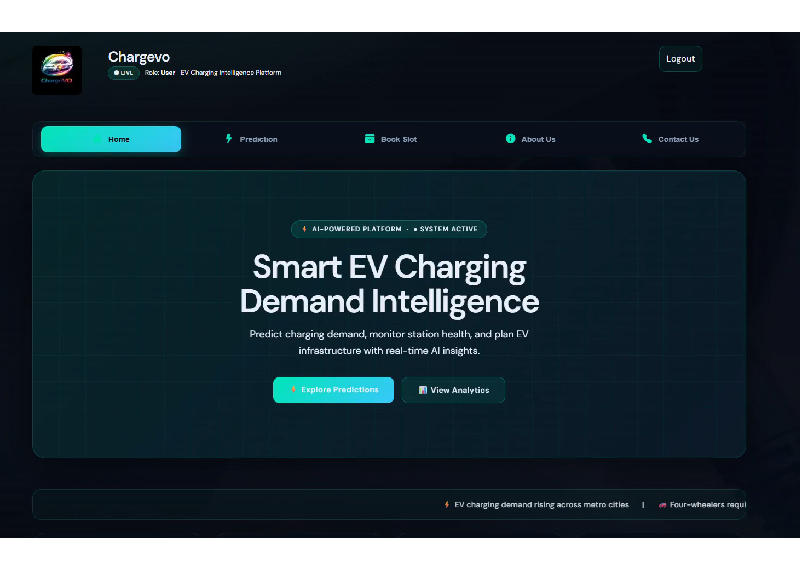
Problem Statement: Rapid EV growth makes charging demand hard to manage. Without prediction, stations face overcrowding or underuse. This project develops a machine learning model to forecast EV charging demand for better infrastructure planning and power management.
Tools used: Python, Pandas, Numpy, Matplotlib, Seaborn, Scikit-learn, statsmodels
Objective: To develop a machine learning-based EV Charging Demand Predictor that forecasts future charging demand using historical data and usage patterns. The system helps optimize charging station utilization, supports efficient energy distribution, and enables better infrastructure planning for the growing adoption of electric vehicles.
Insights: As electric vehicle adoption continues to grow, accurately predicting charging demand is essential for reducing congestion, minimizing waiting times, and ensuring efficient power utilization. This project analyzes historical charging patterns to forecast future demand, enabling charging station operators and city planners to make data-driven decisions for infrastructure expansion, energy management, and improved user experience.
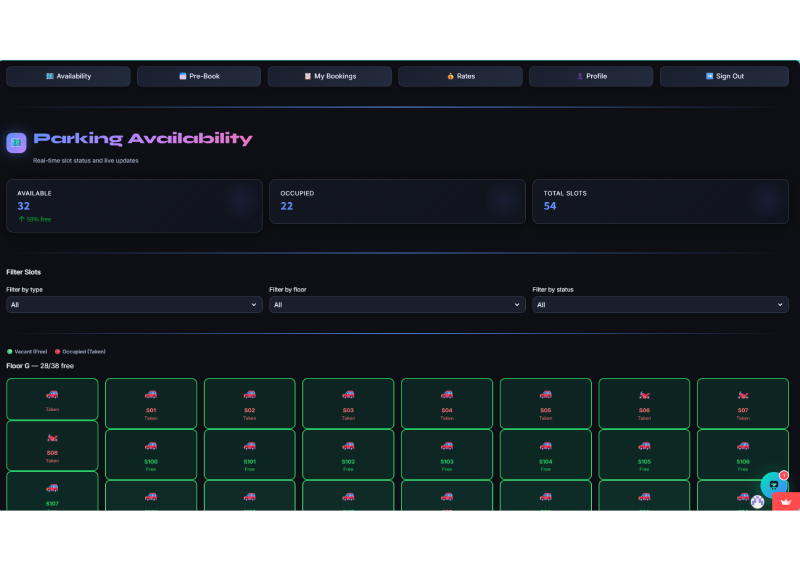
Problem Statement: In busy areas like shopping malls, offices, hospitals, and smart cities, drivers waste a lot of time searching for available parking spaces. This leads to traffic congestion, fuel wastage, and frustration.
Tools used: Programming Language - Python
Libraries & Frameworks :
OpenCV – Image & video processing
NumPy – Array and matrix operations
Matplotlib – Visualization (optional)
Scikit-learn / TensorFlow
Objective: To develop an AI-powered Parking Slot Occupancy Detection System that uses computer vision and object detection to identify vacant and occupied parking spaces in real time. The system aims to improve parking efficiency, reduce search time, minimize traffic congestion, and support smart parking
Insights: Finding available parking in crowded areas is often time-consuming and contributes to traffic congestion, fuel consumption, and increased emissions. This project leverages computer vision and object detection to monitor parking spaces in real time, automatically detecting occupied and vacant slots. The solution enables efficient parking management, improves the driver experience, and supports the development of smart city infrastructure through data-driven parking analytics.
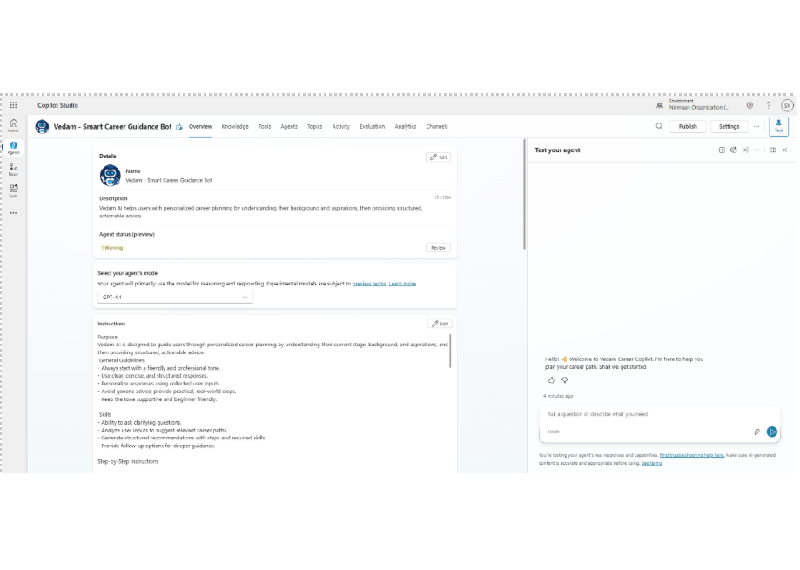
Problem Statement: Students spend too much time searching across multiple platforms for career guidance, often receiving generic advice and incomplete information. This leads to confusion, poor career decisions, and missed opportunities. We built Vedam to turn scattered information into clear, personalized career decisions.
Tools used: MS Copilot Studio
Objective: To develop Vedam, an AI-powered career guidance platform using Microsoft Copilot Studio that empowers students to make informed and personalized career decisions. The platform provides intelligent career counseling by offering tailored career recommendations, structured learning roadmaps, skill development suggestions, and insights into educational and employment opportunities. Through an interactive conversational interface, Vedam
Insights: Students often face difficulty making informed career decisions because relevant information is scattered across multiple sources, such as websites, educational portals, videos, and social media platforms. This fragmented access to information makes the career planning process overwhelming, time-consuming, and confusing.
Furthermore, most traditional career guidance resources provide generic recommendations that fail to consider an individual's unique strengths, interests, skills, academic background, and long-term career aspirations. As a result, students may struggle to identify suitable career paths, develop the right skills, or make confident decisions about their future.
To address these challenges, this project introduces Vedam, an AI-powered career guidance platform built using Microsoft Copilot Studio. By leveraging conversational AI and personalized recommendations, Vedam analyzes user preferences and provides tailored career guidance, customized learning roadmaps, skill development recommendations, certification suggestions, and insights into educational and employment opportunities. This AI-driven approach enables students to make well-informed career decisions, build confidence, and prepare effectively for their chosen career paths through a single, intelligent, and accessible platform.
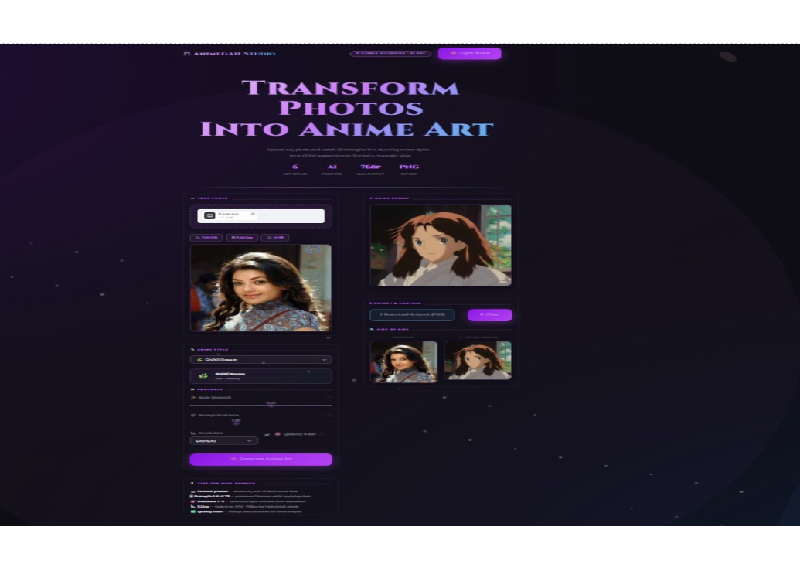
Problem Statement: Creating high-quality anime artwork from ordinary photos usually requires professional artistic skills, powerful software, or time-consuming manual editing. Develop an AI-powered application that transforms images into multiple anime-inspired styles instantly using deep learning, making digital art creation accessible to everyone.
Tools used: Programming Language: Python
Framework: TensorFlow / Keras
Libraries: NumPy, Pandas, Matplotlib, OpenCV, Scikit-learn
Platform: Google Colab / Jupyter Notebook
Dataset: Kaggle (Cartoon Images / Anime Faces Dataset)
Objective: This project uses deep learning models like CNNs and GANs to learn cartoon styles and apply them to real photos. The system will generate cartoon-like images while keeping important features, making it useful for social media, avatars, and creative design.
Insights: The platform democratizes AI-powered digital art by making professional anime-style image generation accessible to everyone, regardless of artistic expertise. It enables creators, designers, students, and content creators to rapidly generate visually appealing artwork, reducing design time while encouraging creativity through customizable AI-generated artistic styles.
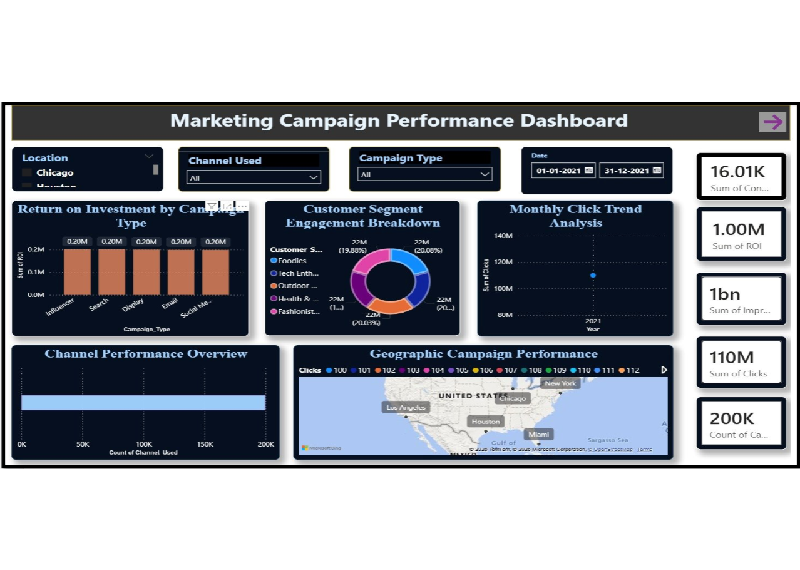
Problem Statement: Businesses often spend time and money on social media marketing but struggle to understand which campaigns actually deliver results. With data scattered across different platforms, tracking performance and making informed decisions becomes difficult. This project solves that problem by bringing all key marketing insights into one interactive dashboard.
Tools used: Microsoft Power BI, Excel / CSV datasets, Power Query, DAX
Objective: The objective of this project is to develop an interactive dashboard that simplifies the analysis of social media marketing campaigns by presenting key metrics such as engagement, reach, conversions, and ROI in one place, enabling businesses to make faster and more effective marketing decisions.
Insights: The dashboard helps identify which campaigns perform best, which platforms generate higher engagement and conversions, and where marketing efforts should be focused to improve overall campaign performance.
Problem Statement: Consumers often lack clear information about the environmental impact of products across their lifecycle—manufacturing, usage, and disposal—making it difficult to make sustainable choices. There is a need for an intelligent system that can automatically assess and classify products based on their environmental impact.
Tools used: Power BI, Pandas, ScikitLearn, Tensor Flow
Objective: Organizations and consumers often face challenges in identifying the sustainability and recyclability of products due to limited and scattered environmental information. Manual product classification and sustainability assessment are time-consuming, inconsistent, and prone to errors. This project proposes an AI-powered Product Classification and Sustainability Analysis System that automatically classifies products and evaluates their environmental impact. The system provides
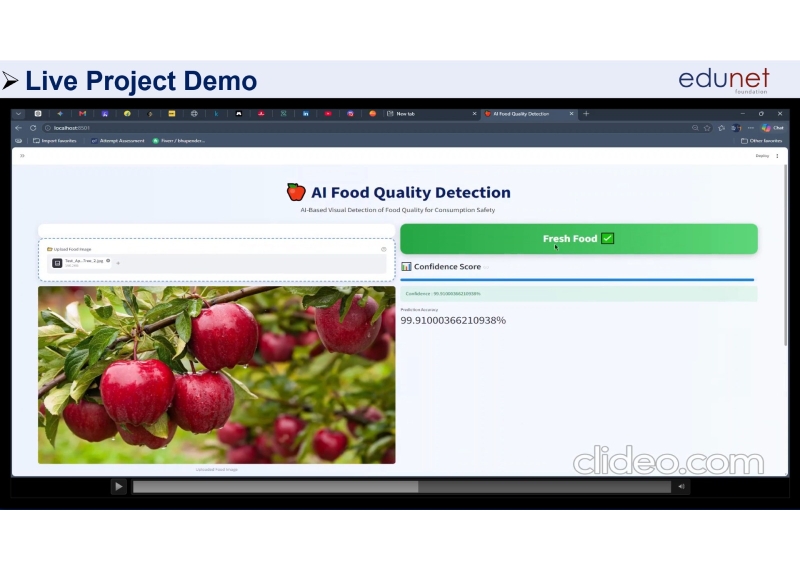
Insights: AI automatically classifies products as Eco-Friendly or Non-Eco-Friendly, helping users make quick sustainable decisions while promoting environmental awareness and waste reduction.
Problem Statement: Many individuals and small business owners struggle to manage their finances effectively due to lack of financial knowledge, poor expense tracking, and absence of personalized guidance.
Existing tools are either too complex or do not provide intelligent insights. There is a need for a simple, AI-powered system that can analyze financial data, track expenses, and provide smart recommendations for better financial decisions.
Tools used: Python, Streamlit, pandas, matplotlib, CSV , SQL
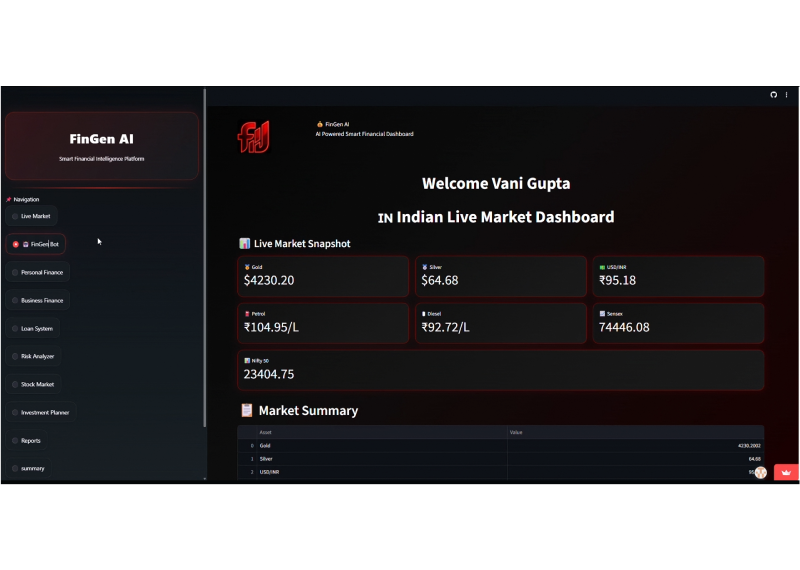
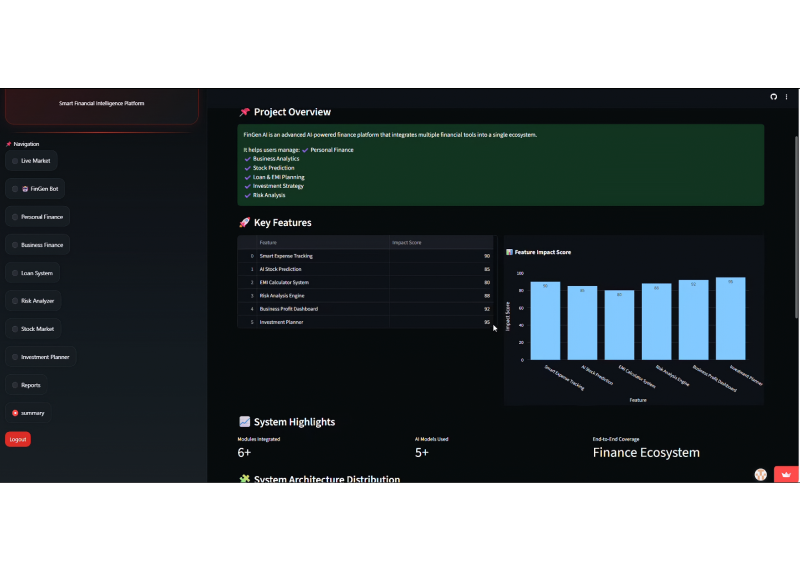
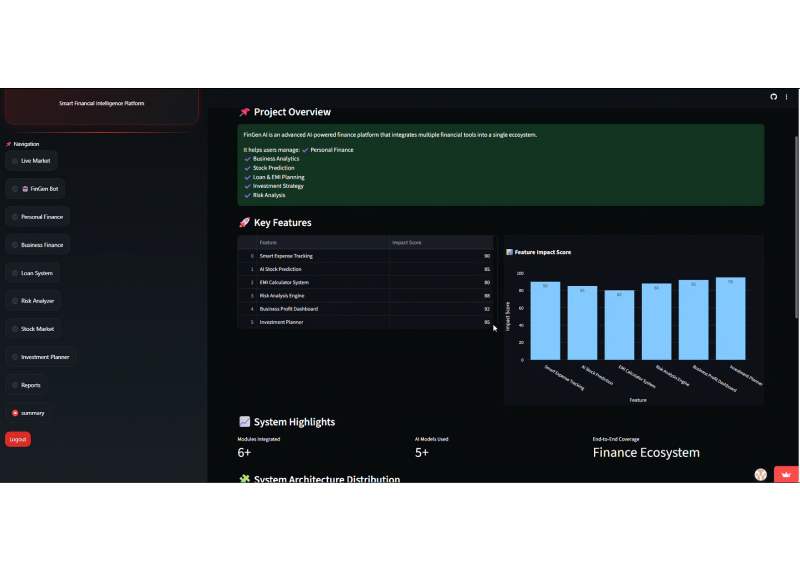
Objective: AI-powered smart finance management system enabling smart expense and savings tracking, loan, EMI, and budget analysis, business profit and financial insights, AI-powered financial predictions, and real-time market dashboard with analytics to improve financial planning, decision-making, and provide AI-driven financial guidance.
Insights: FinGen AI simplifies expense tracking, savings, loans, and investment management using AI while providing smart financial predictions, real-time market insights, and interactive dashboards to enable smarter, faster decisions and enhance financial stability and budgeting efficiency.
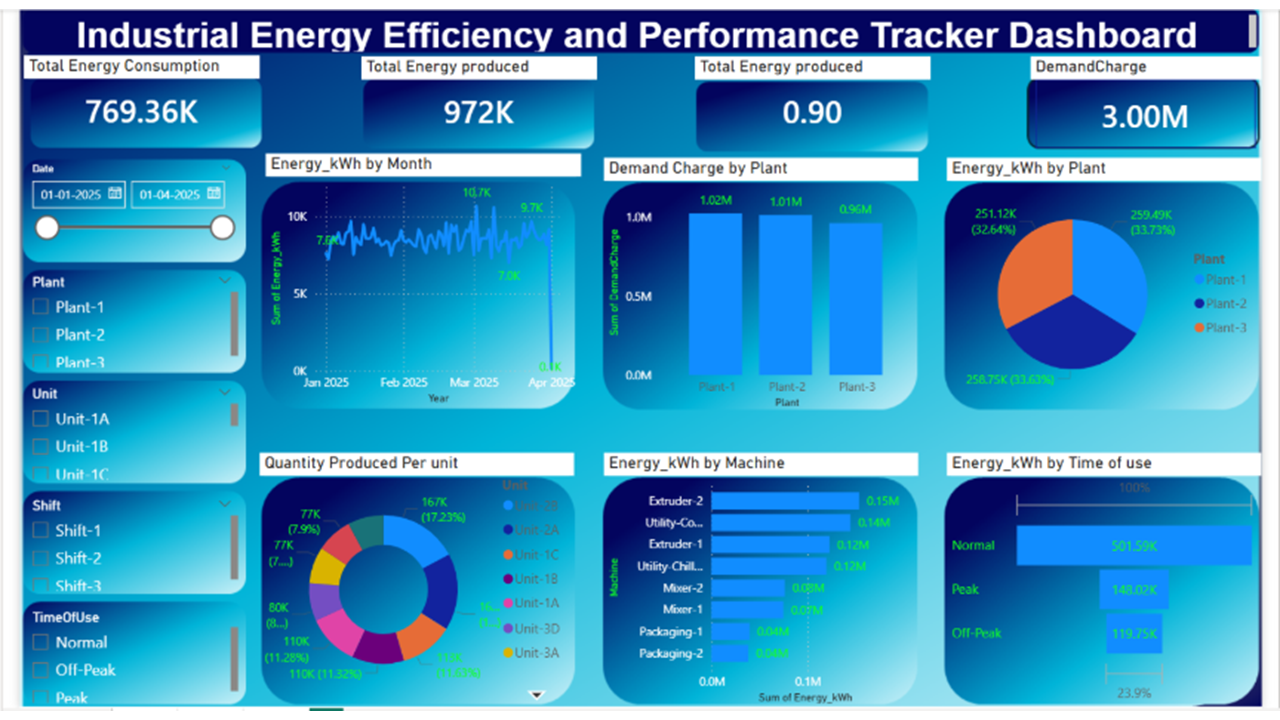
Problem Statement: Industries need to manage their efficiency in different sectors to make profits and utilize their power generation.
Tools used: TensorFlow, ScikitLearn, Pandas
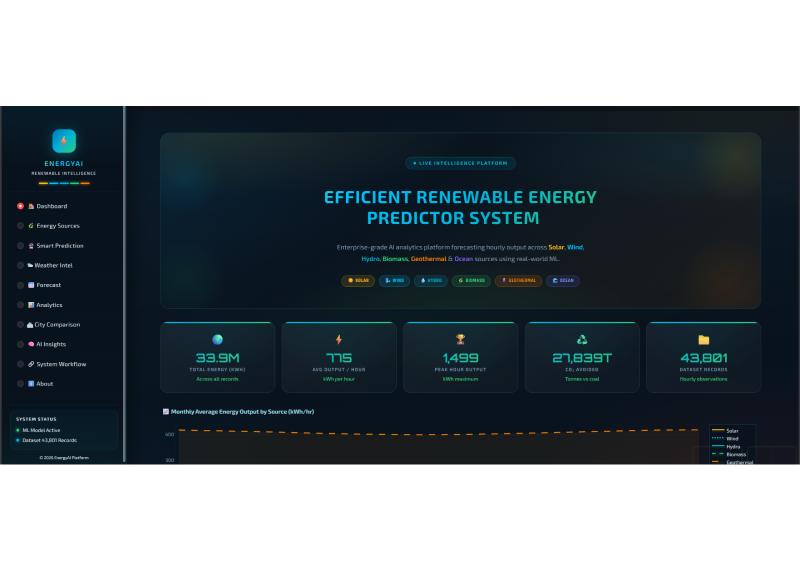
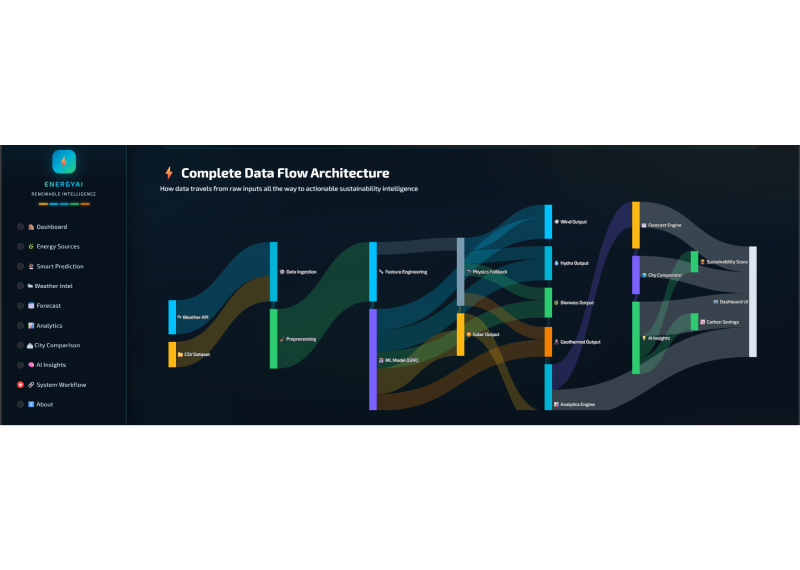
Objective: ML-powered system that analyzes historical energy and weather data to generate real-time renewable energy predictions, helping providers optimize distribution, reduce wastage, and improve grid stability.
Insights: Accurately forecasts renewable energy output using historical and weather data to improve planning, reduce wastage and costs, and support sustainable, reliable energy management.
Problem Statement: Businesses often face difficulty in tracking and analyzing their sales performance due to scattered data and lack of visualization tools. Without proper insights, decision-making becomes inefficient, affecting revenue growth and operational strategy.
Tools used: PowerBI,Excel/csv,Dax
Objective: To collect and integrate sales data from multiple sources.
To design an interactive Power BI dashboard for visualizing sales performance.
To analyze key business metrics such as revenue, profit, sales trends, and regional performance.
To identify high-performing products, customers, and sales regions.
To support business decision-
Insights: Monthly and yearly sales trends.
Top-performing products.
Lowest-performing products.
Regional sales comparison.
Customer purchasing behavior.
Profitability analysis.
Sales target achievement.
Revenue contribution by category.
Best-performing sales representatives (if applicable).
Problem Statement: Manual recognition of handwritten digits is time-consuming and error-prone, especially in applications like postal services, bank cheque processing, and form digitization. There is a need for an automated system that can accurately classify handwritten digits from images.
Tools used: Python ,Tensorflow,Keras,pypdf,Matplotlib
Objective: To develop a deep learning model capable of recognizing handwritten digits.
To preprocess image data for improved classification accuracy.
To train and evaluate a Convolutional Neural Network (CNN) using the MNIST dataset.
To accurately classify handwritten digits into their corresponding numerical classes.
To demonstrate the practical application of deep learning in image recognition tasks.
Insights: Overall model accuracy.
Precision, Recall, and F1-score.
Confusion matrix showing commonly misclassified digits.
Recognition confidence for predictions.
Training and validation performance over epochs.
Impact of preprocessing techniques on model performance.
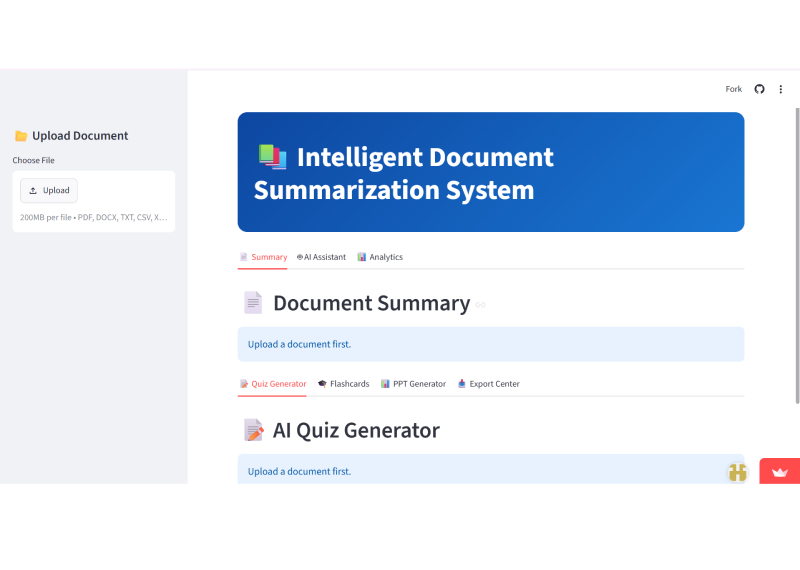
Problem Statement: People often deal with lengthy documents such as bills, reports, and articles, which are time-consuming to read and understand. Extracting key information manually can be inefficient and lead to missed insights.
Tools used: Python ,Streamlit,Groq api,Flask,RAG,langchain
Objective: To develop an intelligent system capable of automatically summarizing lengthy documents.
To extract and process text from uploaded documents.
To implement Retrieval-Augmented Generation (RAG) for context-aware summarization.
To generate concise and meaningful summaries using a Large Language Model (LLM).
To provide an easy-to-use interface for document upload and summary generation.
Insights: Key topics discussed in the document.
Important entities such as names, organizations, and locations.
Overall document themes.
Summary length reduction compared to the original document.
Most relevant retrieved document chunks used for summarization.
User query relevance and retrieval effectiveness.
Time saved compared to manual document reading.
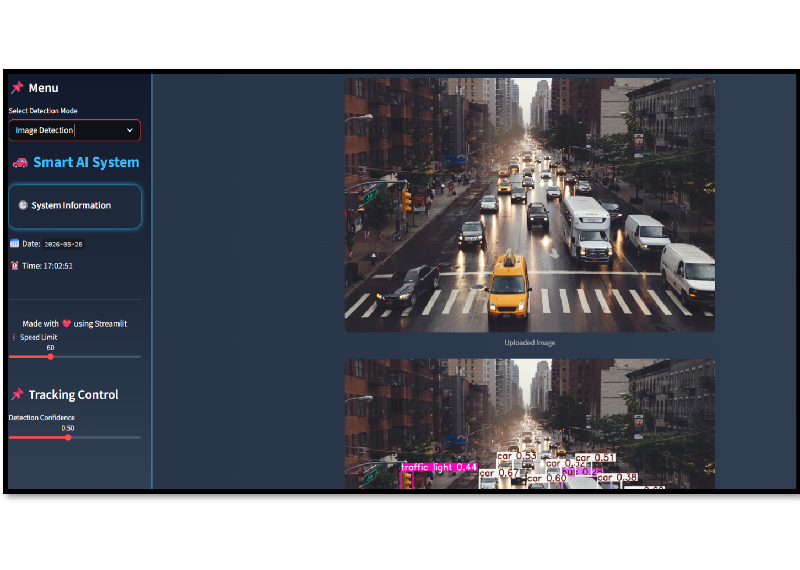
Problem Statement: Road accidents happen because drivers cannot detect obstacles on time due to distraction, fatigue, or poor visibility.
There is a need for a smart system that can automatically detect objects like vehicles and pedestrians in real time and help prevent accidents by giving warnings or stopping the vehicle.
Tools used: Python, OpenCV, YOLO, TensorFlow/PyTorch, Arduino IDE
Objective: The objective of this project is to develop an AI-powered real-time object detection system that can accurately identify vehicles, pedestrians, and other road obstacles. The system is designed to provide timely warnings to drivers, improving their awareness of potential hazards and reducing the likelihood of road accidents caused by distraction, fatigue, or poor visibility.
Insights: Road accidents often occur because drivers are unable to detect obstacles in time due to factors such as distraction, drowsiness, and low visibility. By using real-time object detection with artificial intelligence, the system continuously monitors the road, recognizes potential hazards, and alerts the driver instantly. This proactive approach enhances road safety, minimizes collision risks, and supports safer driving in different environmental conditions.
Problem Statement: In the stock market, investors face information overload due to a large amount of news and financial data. It is difficult for them to quickly understand and decide whether the news is positive or negative for a stock.
A system is needed that can summarize news and analyze its sentiment to help investors make better and faster decisions.
Tools used: Python, Google Gemini API, Streamlit, Plotly
Objective: The objective of this project is to develop an AI-powered system that automatically summarizes stock market news and performs sentiment analysis to classify news as positive, negative, or neutral. The system aims to help investors quickly understand the impact of financial news, reduce information overload, and support faster and more informed investment decisions.
Insights: Investors are exposed to a massive volume of financial news every day, making it difficult to analyze all the information efficiently. By combining news summarization with sentiment analysis, the system extracts the most important information and identifies the overall sentiment of the news. This enables investors to save time, gain valuable market insights, and make more accurate and timely investment decisions.
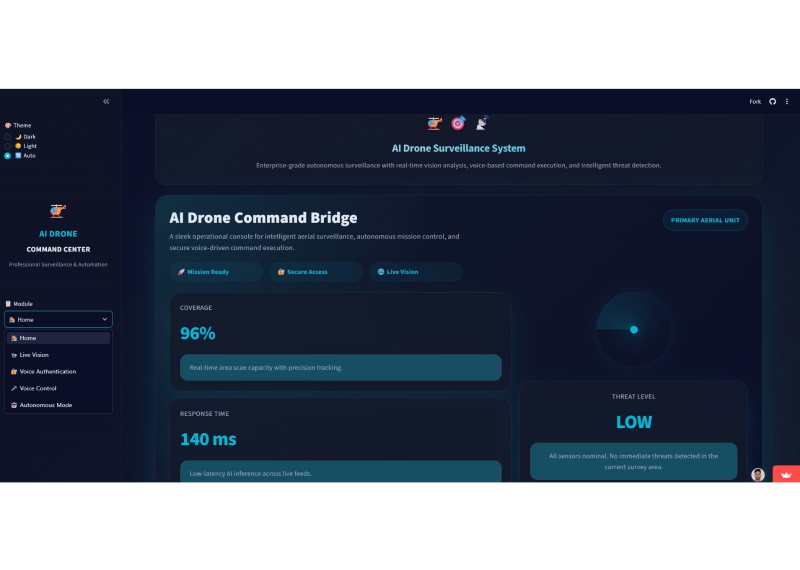
Problem Statement: Traditional drones are mostly controlled manually using remote controllers, which require continuous human effort and are not efficient for smart monitoring tasks. In many real-life situations like traffic monitoring, surveillance, and disaster management, there is a need for a more intelligent and automated system.
The problem is to develop a smart drone system that can be controlled using voice commands and can perform tasks like
Tools used: Python, OpenCV, TensorFlow / YOLO, SpeechRecognition, Drone SDK, NumPy & Pandas
Objective: The objective of this project is to develop an AI-powered smart drone system that can be controlled through voice commands and perform autonomous tasks such as human detection, vehicle monitoring, obstacle avoidance, and real-time surveillance. The system aims to reduce manual intervention, improve operational efficiency, and enhance safety in applications such
Insights: Conventional drones rely heavily on manual control, which limits their efficiency and increases the need for continuous human involvement. By integrating voice control with artificial intelligence and computer vision, the drone can intelligently detect people and vehicles, avoid obstacles, and respond to commands in real time. This automation improves monitoring accuracy, enhances safety, and provides a reliable solution for smart surveillance and emergency response in dynamic environments.
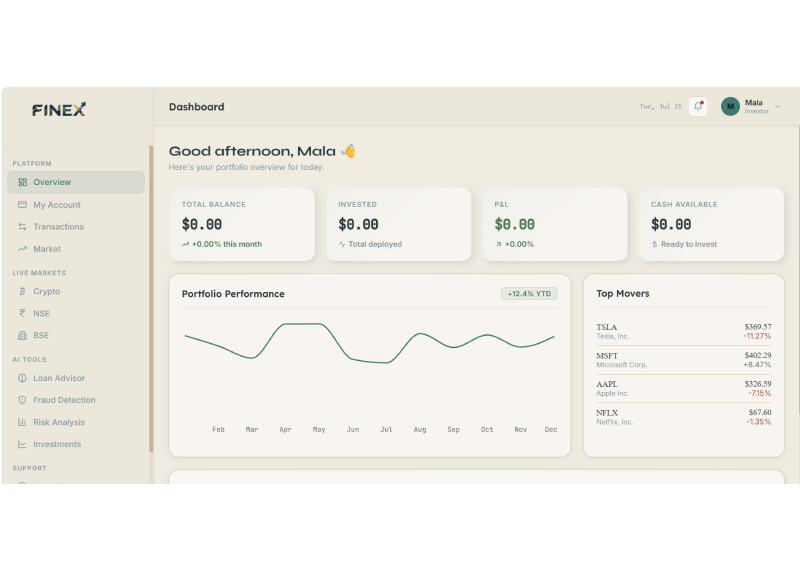
Problem Statement: Generative AI–Based Intelligent Financial Analysis & Decision Support with Integration of AI Model ( ChatBot).
Tools used: SQL,Python, Streamlit / Flask, Transformers Hugging Face, OpenAI API
Objective: To develop FINEX, an AI-powered intelligent financial platform that integrates machine learning and Generative AI to assist users in making informed financial decisions through predictive analytics, fraud detection, expense forecasting, and an interactive AI chatbot.
Insights: FINEX is an intelligent financial analysis platform that combines Machine Learning, Deep Learning, and Generative AI to simplify financial decision-making. Instead of only displaying financial information, the platform analyzes data, predicts future trends, detects anomalies, and explains insights through an AI-powered chatbot.
The project demonstrates how multiple AI models can work together to provide predictive analytics, personalized financial
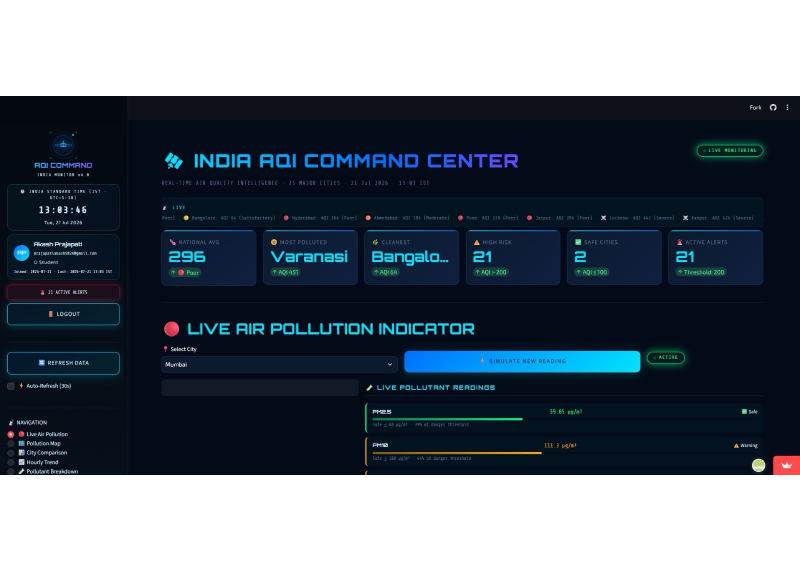
Problem Statement: AI-Driven Air Pollution Indicator and Early Warning System Using Machine Learning and Deep Learning
Tools used: Python,Jupyter NotebookLibrary(Pandas,NumPy, Matplotlib, Seaborn,Scikit-learn,TensorFlow,Keras,LSTM,Random Forest ,Linear Regression Kaggle,Streamlit,Power BI
Objective: To develop an AI-based system that uses historical air quality sensor data to identify key air pollution indicators and predict future pollution levels for early public health warnings.
Insights: The AI-Driven Air Pollution Indicator and Early Warning System uses Machine Learning and Deep Learning techniques to monitor and predict air pollution levels. The system analyzes pollutants such as PM2.5, PM10, NO2, CO, and O3 to forecast future AQI and generate early warnings. It provides real-time monitoring through an interactive dashboard, helping authorities and citizens take preventive measures and improve public health and environmental safety.
Problem Statement: Road accidents often occur due to late detection of pedestrians, vehicles, traffic signs, and obstacles. Human drivers may miss these objects because of distraction, fatigue, or poor visibility. An AI-based object detection system is needed to detect road objects in real time and improve road safety in automotive vehicles.
Tools used: Python, OpenCV, YOLO,NumPy, MySQL, YOLOv8,Matplotlib , Jupiter Notebook
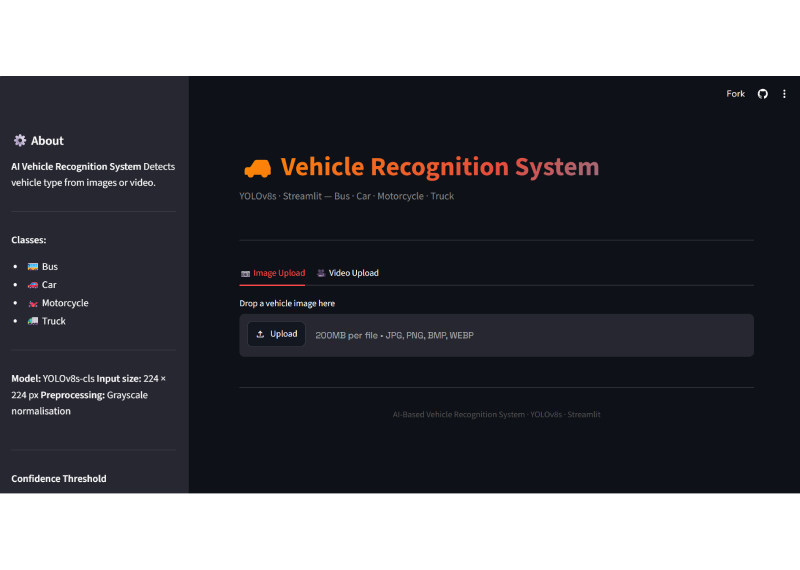
Objective: To develop an AI-based system for automatic vehicle recognition.
To classify vehicles into four categories: Bus, Car, Truck, and Motorcycle.
To reduce manual effort and improve accuracy in vehicle identification.
To enable real-time vehicle recognition using images and a webcam.
To support smart traffic management using deep learning (YOLOv8).
Insights: Our project uses the YOLOv8 deep learning model to recognize vehicles automatically.
The model was trained on around 2,994 images with four vehicle classes.
It can detect vehicles from uploaded images, folders, and live webcam video.
The system helps reduce human effort and provides fast, accurate vehicle classification.
This project can be used in traffic monitoring, toll plazas, parking management, and smart city applications.
In the future, it can be extended to detect more vehicle types, analyze traffic flow, and identify traffic rule violations.
Problem Statement: Many individuals face difficulty in managing their income, expenses, and savings due to lack of financial knowledge and proper guidance.
Tools used: Python,Libraries & Tools,NLTK / SpaCy (Text Processing),Transformers (BERT / GPT),Pandas (Data Handling),Flask (Web Application),MySQL (Database),Jupyter Notebook
Objective: The objective of this project is to develop an AI-based Personal Finance Advisor that helps users manage their income, expenses, and savings more effectively. Using Generative AI, the system provides personalized budgeting tips, financial suggestions, and simple insights based on user data. It aims to make financial planning easier, improve money management, and support better financial decisions.
Insights: This project is designed to help users manage their personal finances in a simple and organized way. It allows users to track their income, expenses, and savings while providing interactive dashboards and visual reports to better understand their spending habits. The AI-powered financial advisor offers personalized budgeting, saving, and investment suggestions based on user data. By combining financial analysis with Generative AI, the system makes money management easier, supports informed financial decisions, and encourages better financial planning for long-term stability.
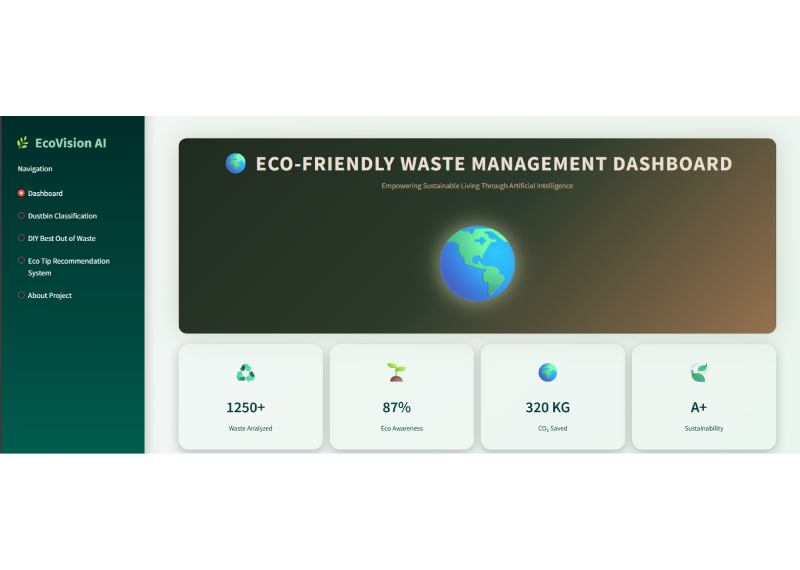
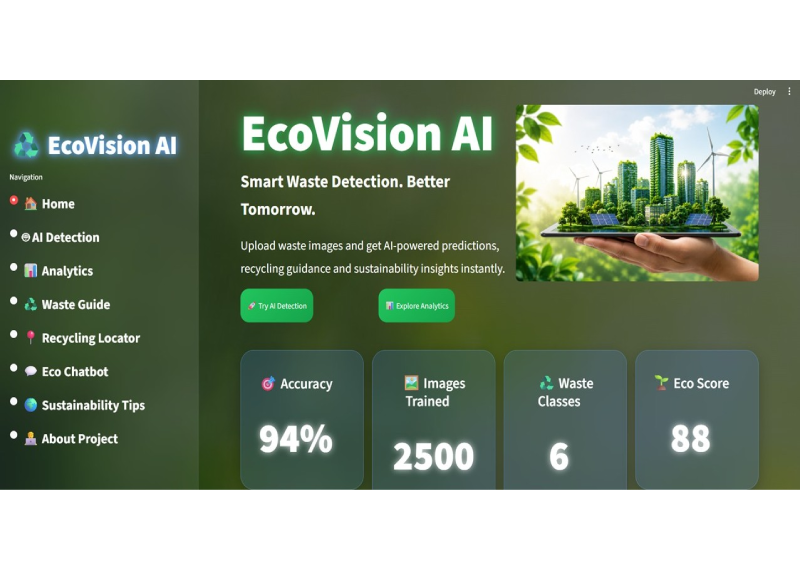
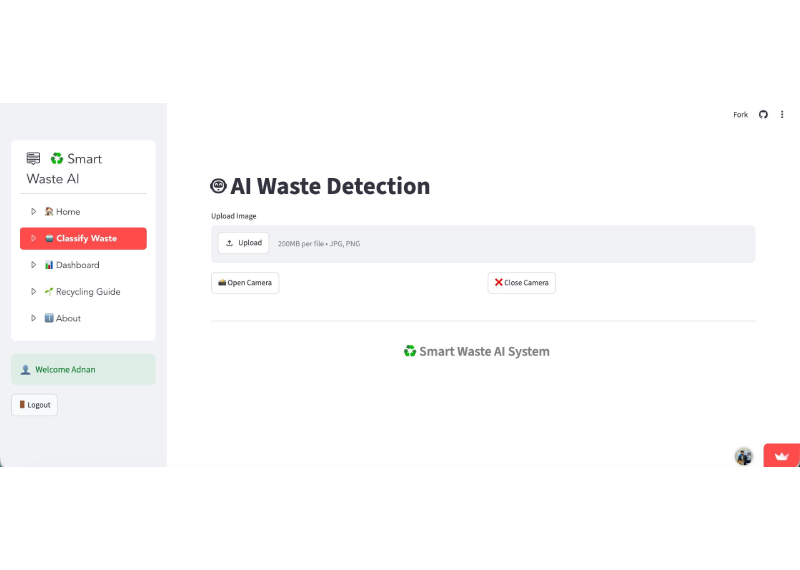
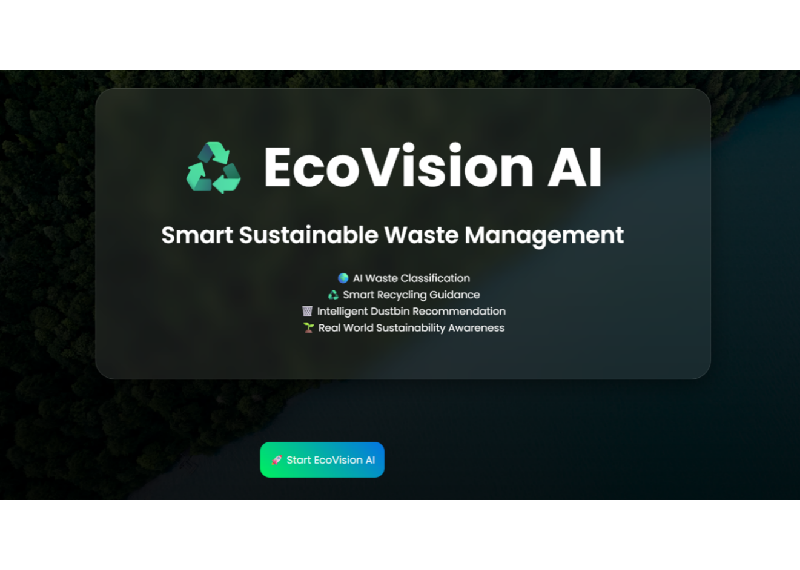
Problem Statement: and harms the environment. An AI-based smart waste segregation system can automatically classify waste using images, making waste management faster, more accurate, and more sustainable.
Tools used: pyter-Notebook,Flask,Streamlit,Kaggle,Plotly,HTML/CSS,GitHub
Objective: segregation system that automatically identifies different types of waste from uploaded images and recommends the correct disposal method. The system also provides recycling guidance, waste management information, sustainability tips, and an interactive chatbot to spread environmental awareness. By
Insights: features together in a single platform, the project encourages responsible waste management and supports cleaner, more sustainable living.
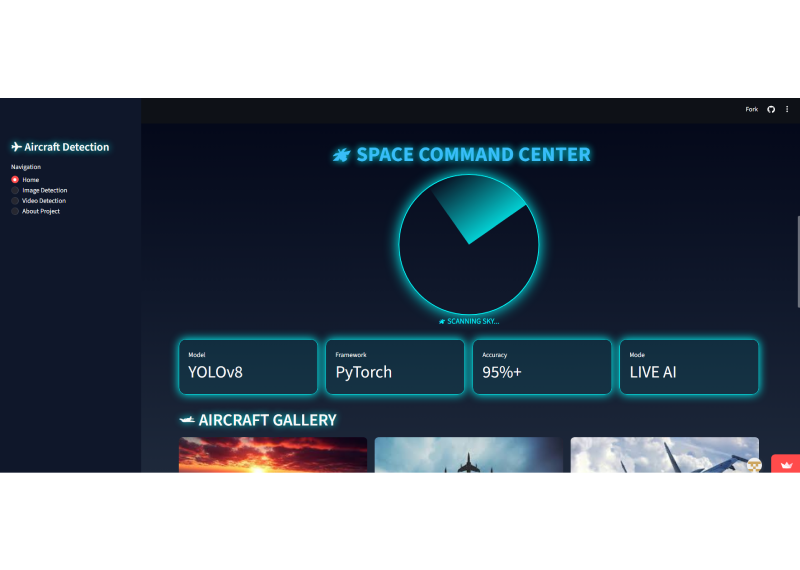
Problem Statement: Monitoring aircraft manually in aerial or satellite images is time-consuming and error-prone. An automated aircraft detection system using computer vision can improve airspace monitoring and aviation safety.
Tools used: Python,Deep Learning ,Libraries & Frameworks,PyTorch,OpenCv,NumPy ,Matplotlib
Objective: The objective of this project is to develop an AI-powered aircraft detection system that automatically identifies aircraft in images and videos using the YOLOv8 deep learning model. The system aims to provide fast and accurate detection with confidence scores and AI-generated insights, reducing the need for manual monitoring. It is designed to support airspace surveillance, airport monitoring,
Insights: This project uses the YOLOv8 deep learning model to detect aircraft in both images and videos quickly and accurately. Users can upload media files, and the system identifies aircraft with confidence scores while also generating AI-based insights about the detection. With its simple interface and real-time processing, the project demonstrates how computer vision can improve airspace monitoring, surveillance, and aviation safety by reducing manual effort and increasing detection accuracy.
Problem Statement: Rapid urbanization has intensified municipal solid waste generation, overwhelming existing waste management systems. Although image-based waste classification techniques aim to improve segregation, most depend on single-context features and controlled conditions, resulting in poor generalization in real-world urban environments with mixed waste, variable lighting, occlusions, and material degradation.
The absence of a robust, scalable, and context-aware deep learning framework for accurate multi-class waste classification
Tools used: Tools & Models: Python, TensorFlow, Keras, OpenCV, NumPy, Pandas, Matplotlib, Seaborn; Models – Custom CNN, ResNet, MobileNet
Objective: The objective of this project is to develop an AI-based waste classification system that automatically classifies waste into predefined categories, improving the accuracy and efficiency of waste segregation while reducing manual effort. The system also aims to support recycling initiatives, promote sustainable waste management, and provide a scalable solution for smart city applications.
Insights: The trained deep learning model successfully classified waste images into their respective categories with high accuracy, demonstrating its effectiveness for automated waste segregation. The model achieved reliable performance on both training and unseen test images, indicating good generalization capability. It accurately distinguished recyclable and non-recyclable waste, reducing the possibility of incorrect classification and supporting efficient recycling processes. Model performance was evaluated using accuracy and loss curves, which showed consistent learning behavior and convergence during training.
Problem Statement: Road accidents are often caused by the inability to detect surrounding objects in a timely and accurate manner. Pedestrians, vehicles, traffic signs, animals, and road obstacles must be identified in real time to ensure road safety. Traditional monitoring systems are not capable of handling complex and dynamic traffic environments. This project aims to develop an Al-based automotive object detection system that can identify and analyze road objects and generate
Tools used: Python, TensorFlow, SQL, Microsoft Excel, Power BI
Objective: The objective of this project is to develop a real-time object detection system using TensorFlow.js COCO-SSD that detects multiple object categories from live camera feeds, images, and videos. The system also aims to store detection data, provide interactive analytics through visual dashboards, and generate customizable reports to support efficient monitoring and decision-making.
Insights: The system achieves reliable real-time object detection by accurately identifying and tracking multiple object categories across live video streams, images, and recorded videos. Detection data is efficiently stored in an SQLite database with low latency, enabling seamless logging and retrieval. The analytics dashboard provides clear visual insights into object detection patterns and system performance, supporting effective monitoring. Additionally, the automated Excel reporting feature organizes detection records into structured worksheets, making it easier to analyze data, identify high-risk detections, and generate comprehensive reports for further evaluation.
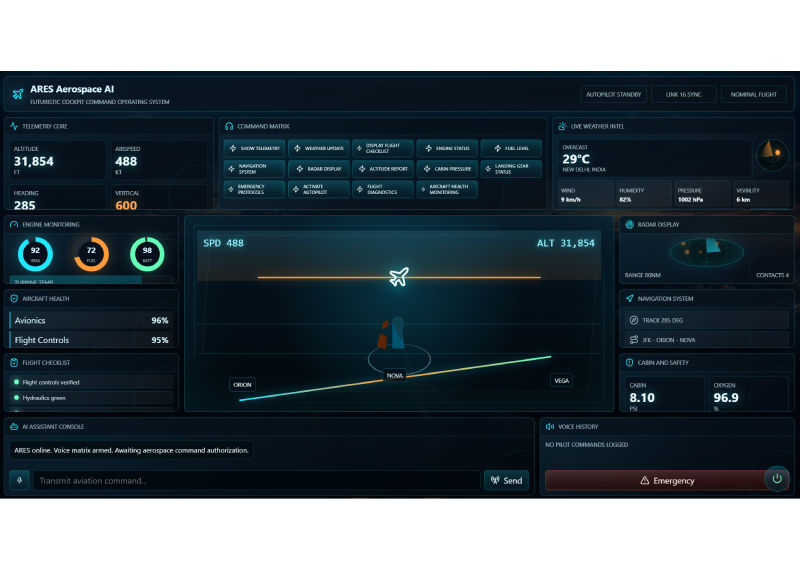
Problem Statement: Modern aerospace operations require pilots and ground control personnel to manage complex systems in time-critical and safety-sensitive environments. Heavy reliance on manual controls and conventional communication methods increases cognitive workload and the likelihood of human error, particularly during high-stress or emergency situations. Despite advances in avionics, there is no efficient, intelligent, hands-free voice-based system to support real-time
Tools used: Speech Recognition Library: SpeechRecognition
Audio Processing: PyAudio
Text-to-Speech: pyttsx3
IDE: VS Code / PyCharm
Operating System: Windows / Linux
Optional (Advanced): NLP (Natural Language Processing)
Objective: The objective of this project is to develop a speech recognition-based virtual assistant for aerospace applications that enables hands-free interaction through voice commands. The system aims to reduce pilot workload, improve operational efficiency, minimize human error, and provide reliable real-time assistance in safety-critical aerospace environments.
Insights: AVA successfully demonstrates an AI-powered voice co-pilot system that integrates speech recognition, text-to-speech, real-time telemetry simulation, and live weather information into a unified cockpit interface. The project shows that voice-driven checklist automation can streamline flight procedures and help reduce the risk of human error during critical operations. Flight commands and telemetry data are efficiently logged in a SQLite database, enabling post-flight analysis and performance review. Its modular architecture also ensures scalability, allowing new features and aerospace modules to be integrated with minimal changes to the existing system.
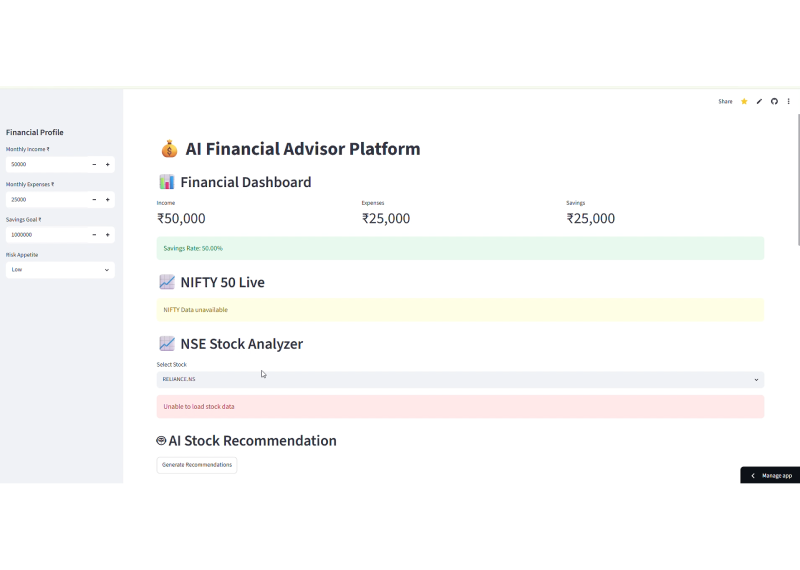
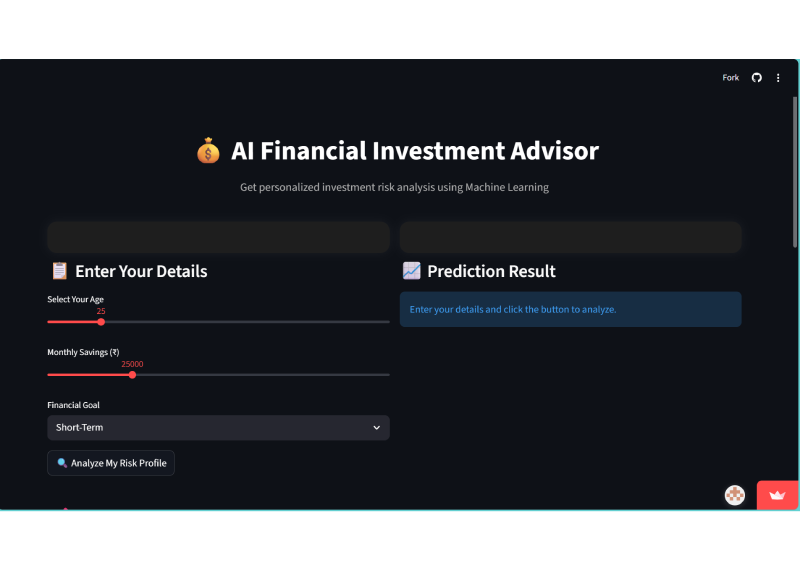
Problem Statement: Despite the availability of digital banking, a large portion of the population struggles with financial literacy and cannot translate raw transaction data into meaningful, long-term wealth-building strategies. Traditional financial advisors remain expensive and out of reach for many, while current banking apps primarily offer retrospective tracking of finances without providing proactive, personalized guidance. This creates a gap in accessible, real-time financial advice, leaving users without the tools to make informed, strategic decisions for their financial future.
Tools used: AI,ML,Python,NLP,Streamlit
Objective: To develop a Generative AI-powered Financial Advisor that provides personalized, real-time financial guidance by analyzing users' financial data, spending patterns, and goals. The system aims to simplify financial planning through intelligent budgeting, investment recommendations, savings strategies, and goal-based advice. By leveraging Generative AI, it delivers context-aware insights that evolve with the user's financial journey, making expert financial guidance more accessible,
Insights: Many individuals struggle to convert transaction data into meaningful financial decisions due to limited financial literacy.
Traditional financial advisory services are often expensive, making personalized guidance inaccessible to a large population.
Existing banking applications primarily focus on tracking past expenses rather than providing proactive financial recommendations.
Generative AI enables personalized, context-aware financial advice based on users' spending habits, income, and financial goals.
Real-time budgeting, savings, and investment recommendations help users make informed financial decisions and improve long-term wealth creation.
An AI-powered financial advisor enhances accessibility, promotes financial inclusion, and empowers users to achieve their financial goals with confidence.
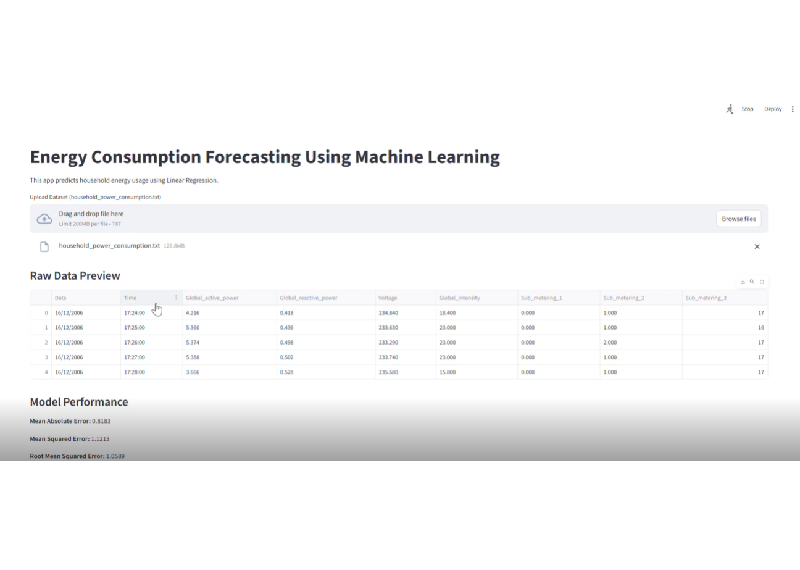
Problem Statement: Unpredictable energy demand leads to inefficient power distribution and wastage. This project focuses on predicting future energy consumption using historical data, enabling better energy management and reducing power loss
Tools used: Programming: Python
Libraries: Pandas, NumPy, Scikit-learn
Models: Linear Regression, LSTM
Visualization: Matplotlib / Power BI
Dataset: Energy consumption dataset (Kaggle)
IDE: Jupyter Notebook
Objective: To develop an AI-powered Energy Consumption Prediction System that analyzes historical energy usage data to accurately forecast future energy demand. The system aims to support efficient power distribution, optimize energy resource utilization, reduce energy wastage, and enable data-driven decision-making for smarter and more sustainable energy management.
Insights
Insights: Unpredictable energy demand often results in inefficient power distribution and unnecessary energy wastage.
Historical energy consumption data can be leveraged to accurately forecast future demand using AI and machine learning.
Accurate demand prediction enables better resource planning and load balancing across the power grid.
Predictive analytics helps reduce operational costs, minimize power loss, and improve energy efficiency.
The system supports utilities and organizations in making proactive, data-driven energy management decisions.
AI-driven forecasting contributes to sustainable energy utilization, improved grid reliability, and smarter infrastructure planning.
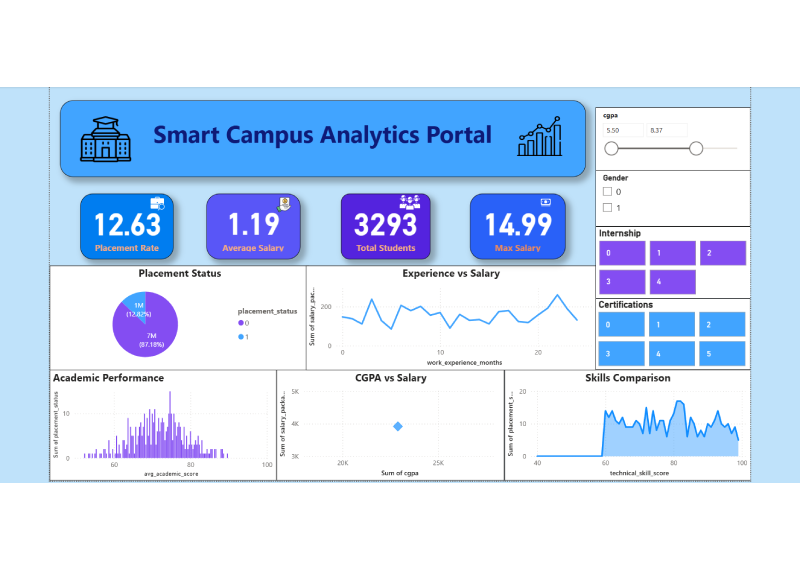
Problem Statement: Educational institutions collect large amounts of data across admissions, academics, placements, and finance, but traditional dashboards are often static and fail to support interactive exploration. The challenge is to build a Power BI–based interactive analytics portal that uses buttons, bookmarks, drill-throughs, and what-if parameters to provide dynamic
Tools used: Python with Pandas & NumPy,PowerBI,SQL
Objective: To develop a Smart Campus Analytics Portal that transforms institutional data into interactive, actionable insights. The portal aims to integrate data from admissions, academics, placements, and finance while enabling users to explore information dynamically through dashboards, drill-through reports,
Insights: Educational institutions generate large volumes of data, but traditional reports often lack interactivity and actionable insights.
Interactive Power BI dashboards enable stakeholders to explore data from multiple perspectives and make informed decisions.
Features such as drill-throughs, bookmarks, and buttons enhance navigation and improve the user experience.
What-if parameters allow administrators to simulate different scenarios for strategic planning and resource allocation.
Real-time analytics help identify trends in student performance, admissions, placements, and financial operations.
The Smart Campus Analytics Portal promotes data-driven decision-making, improves operational efficiency, and supports better academic and institutional planning.
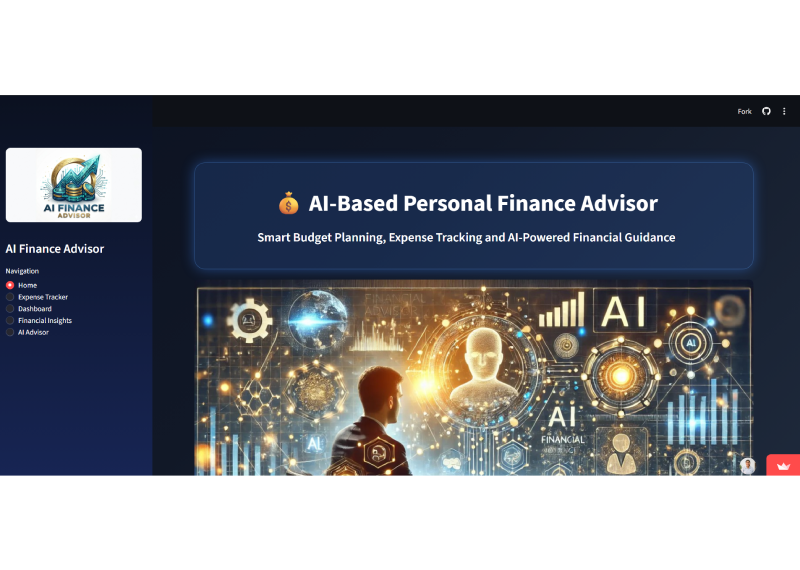
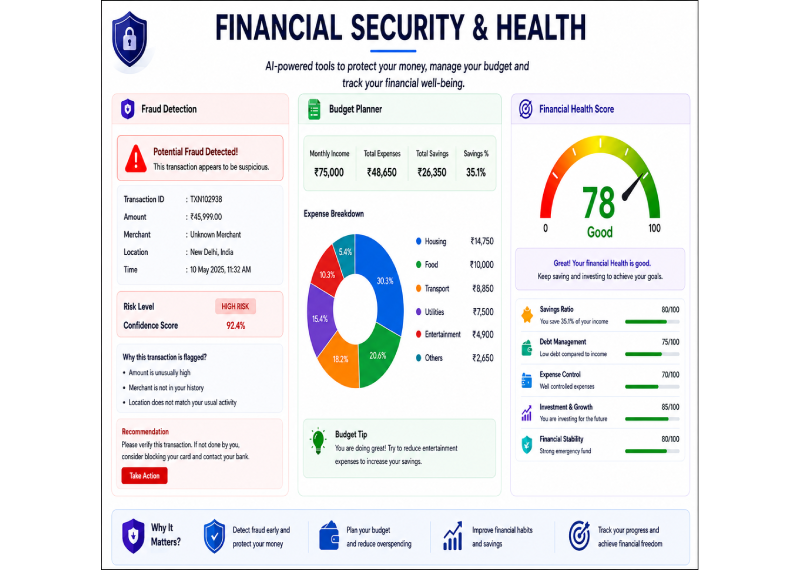
Problem Statement: Many people struggle to manage their expenses, track spending, plan savings, and understand their financial habits. They also lack personalized financial guidance, making budgeting and financial planning difficult.
Tools used: Tool:- Python, Streamlit, Pandas, Plotly, Google Gemini AI API, NumPy
Objective: To develop an AI-powered financial advisor that helps users track expenses, analyze spending patterns, calculate EMI and SIP, plan financial goals, detect suspicious transactions, and receive personalized financial advice through an AI chatbot.
Insights: Insights:-
• Identifies highest spending categories.
• Tracks monthly income and expenses.
• Shows savings and budgeting trends.
• Calculates EMI and SIP instantly.
• Helps users achieve financial goals through planning.
• Detects potentially fraudulent transactions.
• Provides AI-based financial suggestions using Gemini AI.
• Displays interactive charts and dashboards for better financial understanding.
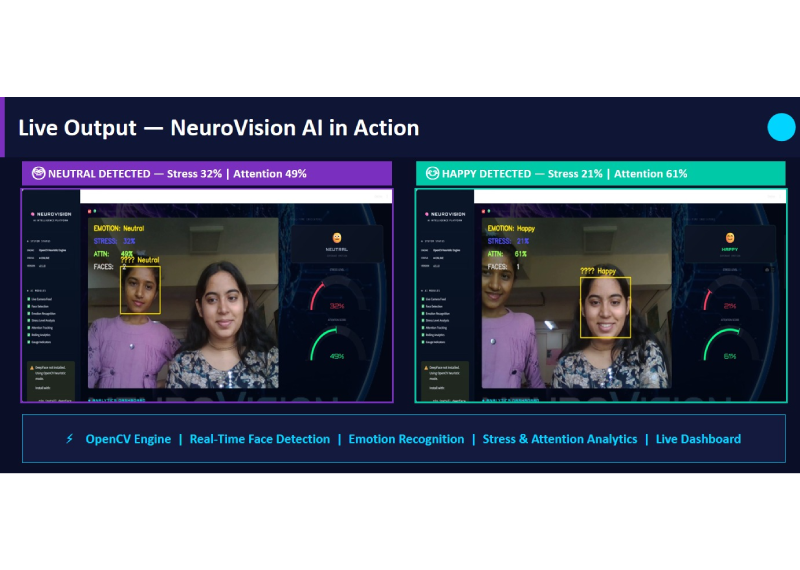
Problem Statement: Monitoring human emotions, stress, and attention manually is difficult, subjective, and time-consuming. There is a need for an AI-powered system that can automatically analyze facial expressions from a live camera feed and provide real-time insights into a person's emotional and cognitive state. This project addresses that need by using Computer Vision and Deep Learning techniques.
Tools used: Python, Streamlit, OpenCV, DeepFace, TensorFlow, Plotly, Pandas, NumPy, Haar Cascade Classifier
Objective: Python, Streamlit, OpenCV, DeepFace, TensorFlow, Plotly, Pandas, NumPy, and Haar Cascade Classifier were used to develop the NeuroVision AI project. Python served as the core programming language, Streamlit was used to build the interactive web interface, OpenCV handled image processing and face detection, DeepFace and TensorFlow enabled AI-based emotion recognition, Plotly created
Insights: *The system detects seven facial emotions (Happy, Sad, Angry, Neutral, Surprised, Fearful, and Disgusted), estimates stress levels based on the detected emotion, calculates attention score using Laplacian variance (image sharpness), provides real-time monitoring through a live webcam feed, displays emotion, stress, and attention trends using interactive charts and gauges, maintains session statistics and emotion history for continuous analysis, and can be applied in healthcare, smart education, employee wellness, behavioral monitoring, and AI research.*
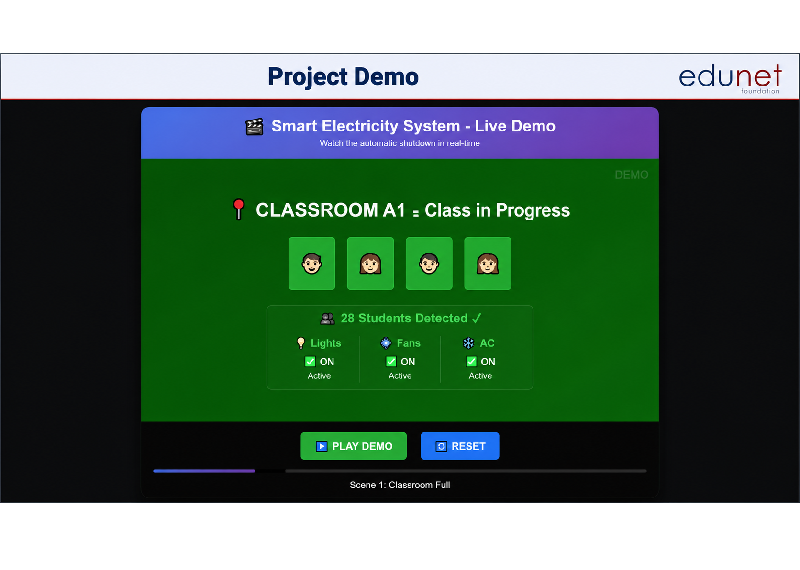
Problem Statement: Lights, fans, and ACs remain ON even after classrooms become empty.Students and staff often leave electrical appliances running unattended.There is no automatic system for monitoring occupancy and controlling devices.This leads to unnecessary electricity consumption, higher electricity bills, fire safety risks, and increased operational costs.The campus experiences approximately 30–40% energy loss, resulting in around ₹5.64 lakh annual electricity waste.
Tools used: Python – Programming Language
OpenCV – Image Processing
YOLOv8 – Human Detection
ESP32 – Smart Device Control
Flask – Web Application Framework
SQLite – Database Management
Machine Learning – Intelligent Decision Making
Computer Vision – Occupancy Detection
Objective: Develop an AI-based energy management system.Detect human presence using computer vision.Automatically control electrical devices based on occupancy.Reduce electricity wastage and operational costs.Improve campus safety through real-time monitoring.Provide energy analytics for better decision-making.
Insights: AI automatically detects room occupancy and switches devices ON/OFF. Reduces unnecessary electricity consumption.Provides real-time monitoring and energy usage analytics. Improves safety by reducing fire hazards caused by unattended electrical devices.Achieves approximately ₹2.04 lakh annual savings and 95% improvement in safety, supporting a smart campus initiative.
Problem Statement: Manual waste segregation is extremely cumbersome and often inaccurate, which affects proper recycling and harms the environment. An AI-based smart waste segregation system can automatically classify waste using images, making waste management faster, more accurate, and more sustainable.
Tools used: Python,Tensorflow,Keras,CNN,Streamlit
Objective: To design and implement an AI-powered smart waste segregation system that automatically classifies waste using image recognition, enabling faster, more accurate, and sustainable waste management.
Insights: The AI-based smart waste segregation system automatically identifies different types of waste using image recognition technology. It reduces the need for manual waste sorting, improves the accuracy of waste classification, and saves time by quickly separating waste into the correct categories. By ensuring proper segregation, the system helps increase recycling, reduces the amount of waste sent to landfills, and contributes to a cleaner environment with lower levels of pollution.
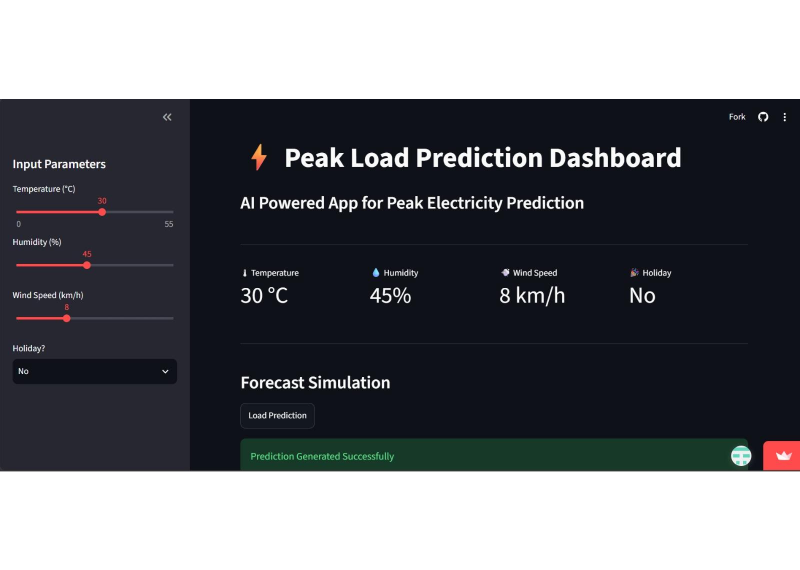
Problem Statement: Electricity demand varies during different hours of the day, and predicting peak load in advance is a major challenge for power management systems. This project aims at analyzing historical electricity consumption data to identify peak load hours and predict future peak demand for better energy planning and load management.
Tools used: Python, Pandas, NumPy, Matplotlib, Scikit-Learn,Streamlit
Objective: To develop a predictive analytics system that forecasts electricity peak load using historical consumption data, enabling efficient energy planning, optimized load management, and reliable power distribution.
Insights: Analyzes past electricity usage to understand consumption patterns.
Predicts future peak electricity demand using AI or machine learning.
Helps electricity providers plan power generation more efficiently.
Reduces the chances of power shortages and overloads.
Improves the reliability and stability of the power supply.
Supports better energy planning and distribution.
Helps reduce energy wastage and operational costs.
Enables smarter decision-making using data.
Can be used by power companies, industries, and smart grids.
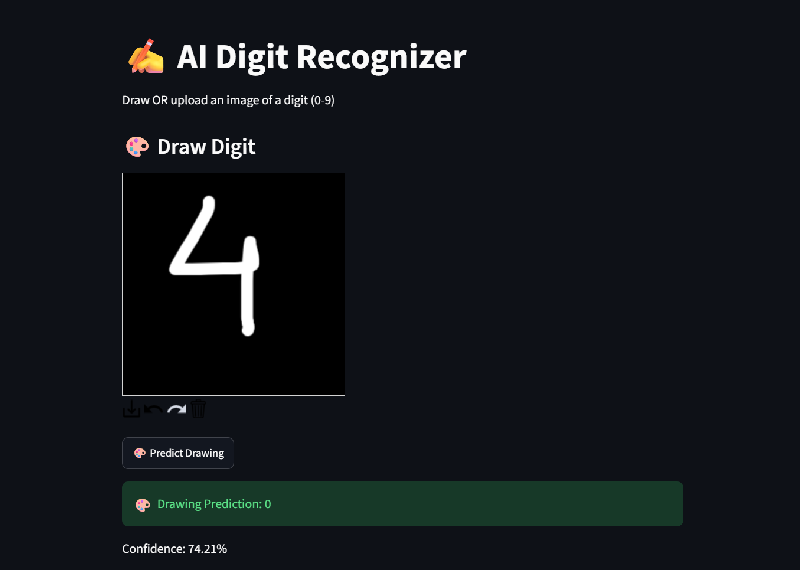
Problem Statement: Manual handwritten digit recognition is time-consuming and error-prone, especially in applications like postal services, bank cheque processing, and form digitization. There is a need for an automated system that can accurately classify handwritten digits from images.
Tools used: Python,Tensorflow, Keras,CNN,Streamlit
Objective: To design and implement an AI-based handwritten digit recognition system that accurately classifies handwritten digits from images, enabling fast, reliable, and automated document digitization.
Insights: The AI-based handwritten digit recognition system automatically identifies handwritten digits from images, significantly reducing the need for manual data entry while improving recognition accuracy. By processing handwritten digits quickly and efficiently, it saves time, minimizes human errors in digit classification, and enhances the overall reliability of document processing. The system learns from training data to continuously improve its recognition performance, making it more accurate over time. It can be effectively used in banks, postal services, schools, and offices to digitize handwritten documents, streamline record management, and support faster, more efficient, and automated handling of large volumes of handwritten data.
Problem Statement: Incorrect waste segregation at the source leads to inefficient recycling, increased landfill usage, and environmental pollution. Many individuals lack awareness or fail to properly categorize waste into biodegradable, recyclable, and hazardous
Tools used: Python, CNN, TensorFlow/Keras, OpenCV
Objective: The objective of this project is to develop an intelligent waste classification system using Artificial Intelligence and Machine Learning that can automatically identify and categorize waste into
Insights: The system uses Artificial Intelligence and Computer Vision to automatically classify waste into biodegradable, recyclable, and hazardous categories from images. It enables accurate, real-time waste segregation, reducing manual effort and improving recycling efficiency. The solution helps minimize landfill waste and environmental pollution by promoting proper disposal practices. It also encourages sustainable living and supports smart waste management initiatives.
Problem Statement: Nowadays, many people unknowingly spend money carelessly and overuse natural resources, which leads to financial stress and environmental damage. Poor management of expenses and lack of awareness about resource consumption contribute to increased pollution and unsustainable living practices. Therefore, there is a need for a smart AI-
Tools used: Pandas, matplotlib, streamlit,Numpy
Objective: The objective of this project is to develop an AI-powered smart expense and resource management system that helps users monitor their daily expenses and track the consumption of essential resources such as electricity, water, and fuel. The system aims to analyze user spending and usage patterns,
Insights: he system uses Artificial Intelligence to analyze users' spending habits and resource consumption patterns for smarter financial and environmental management. It provides personalized recommendations to reduce unnecessary expenses and optimize the use of electricity, water, and fuel. The solution promotes sustainable living by encouraging responsible consumption and informed decision-making. It helps users save money while minimizing resource wastage and environmental impact.
Problem Statement: Traffic congestion analysis is often performed manually, making it time-consuming, inefficient, and unable to provide real-time insights. There is a need for an automated system that can monitor and analyze traffic conditions accurately.
Tools used: YOLO, Python
Objective: The objective of this project is to develop an AI-powered traffic congestion analysis system that automatically monitors and analyzes traffic conditions using real-time video or image data. The system aims to detect traffic density, identify congestion levels, and provide timely insights to
Insights: The system uses Artificial Intelligence and Computer Vision to automatically monitor and analyze traffic conditions from real-time video or image data. It detects traffic density and congestion levels, providing accurate insights for efficient traffic management. The solution reduces the need for manual monitoring while improving route planning and traffic flow. It helps minimize travel delays, enhances road safety, and supports the development of smart transportation systems.
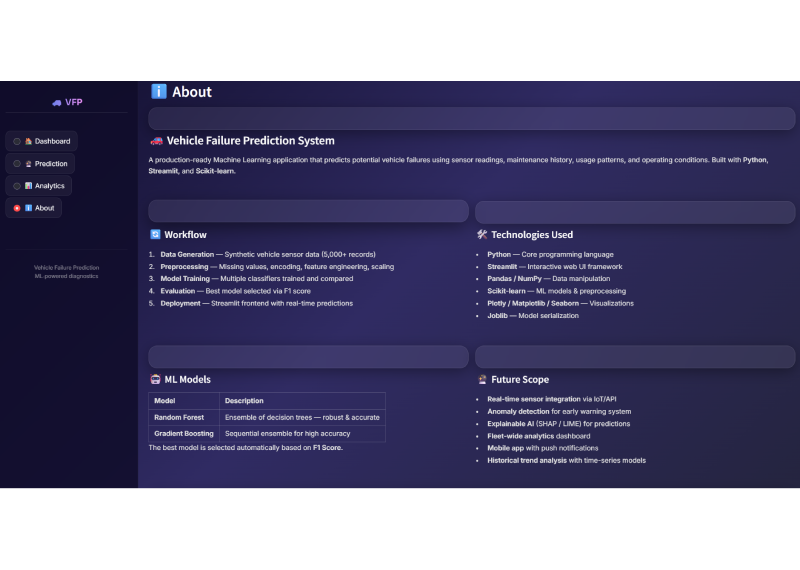
Problem Statement: Vehicle failures can cause costly downtime, safety risks, and unexpected repair expenses. The goal is to build a data science model that predicts potential vehicle breakdowns using sensor data, maintenance history, usage patterns, and operating conditions.
Tools used: Pandas, Matplotlib, Streamlit,Numpy
Objective: Vehicle Failure Prediction Using Machine Learning Pandas, matplotlib, streamlit,numpy Vehicle failures can cause costly downtime, safety risks, and unexpected repair expenses. The goal is to build a data science model that predicts potential vehicle breakdowns using sensor data, maintenance history, usage patterns, and operating conditions.
Insights: Analyzed vehicle sensor readings and maintenance records to identify key factors contributing to equipment failures.
Built a machine learning model to predict potential vehicle breakdowns and evaluated its performance using metrics such as Accuracy, Precision, Recall, and F1-score.
Developed an interactive Streamlit dashboard to monitor vehicle health, identify high-risk vehicles, and support proactive maintenance planning.
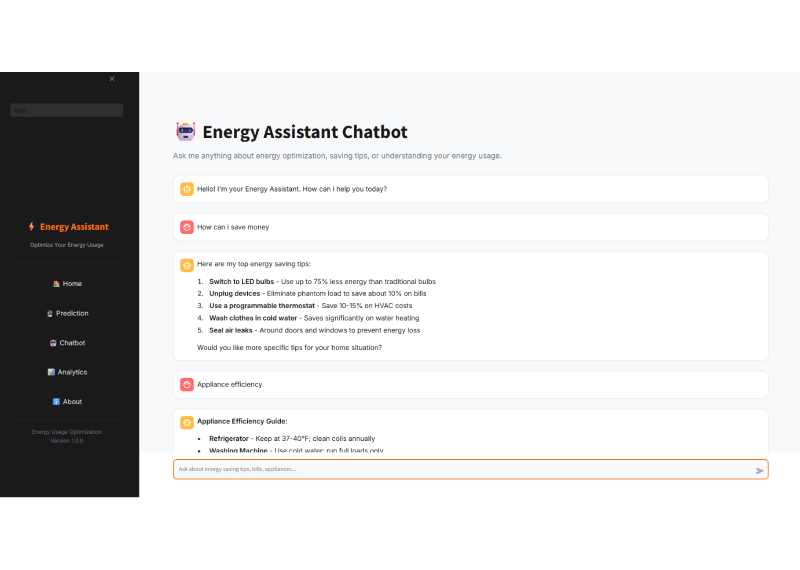
Problem Statement: Many households and organizations waste energy because they do not know when and how to reduce consumption effectively. The objective is to build a chatbot-based data science solution that helps users understand their energy usage and suggests practical ways to optimize it.
Tools used: Pandas, Matplotlib, Streamlit,Numpy
Objective: Many households and organizations consume more energy than necessary due to limited awareness of their usage patterns and optimization opportunities. The goal is to develop a chatbot-based energy usage optimization system that analyzes energy consumption data, identifies inefficiencies, and provides personalized recommendations to help users reduce energy usage, lower costs,
Insights: Analyzed historical energy consumption data to identify usage patterns, peak demand periods, and key factors contributing to excessive energy consumption.
Developed an intelligent chatbot that interprets user queries, provides data-driven insights into energy usage, and recommends practical energy-saving measures based on consumption trends.
Enabled users to monitor energy efficiency, estimate potential savings, and make informed decisions that reduce electricity costs while encouraging environmentally sustainable behavior
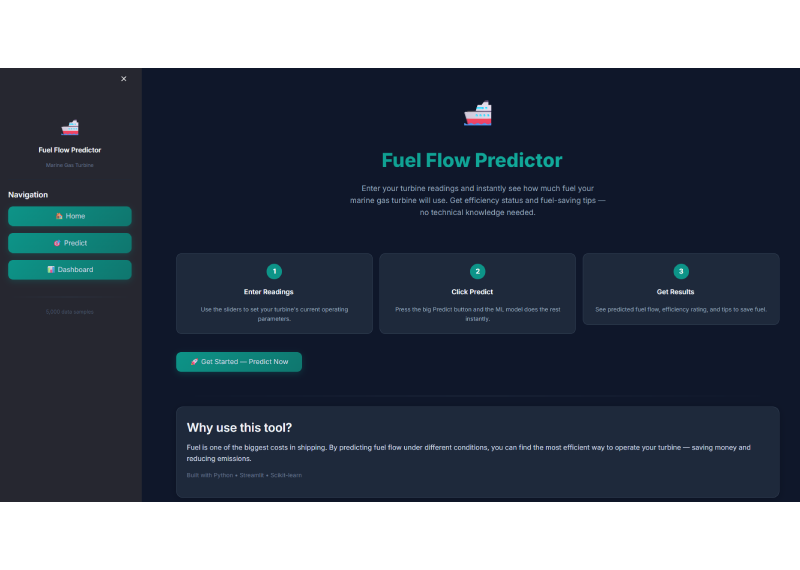
Problem Statement: Ship gas turbines consume large amounts of fuel, and inefficient fuel flow can increase operating costs and reduce performance. The goal is to build a data science model that analyzes turbine operating data to predict and optimize fuel flow under different marine conditions.
Tools used: Pandas, Matplotlib, Numpy
Objective: Develop a Ship Gas Turbine Fuel Flow Prediction model using machine learning to analyze turbine operating data and accurately predict fuel flow under different marine operating conditions. The model helps optimize fuel consumption, improve engine efficiency, reduce operational costs, and support predictive maintenance.
Insights: Identified the operating parameters that have the greatest impact on ship gas turbine fuel flow and overall engine performance.
Built and evaluated a regression model to accurately predict fuel flow using metrics such as MAE, RMSE, and R² score.
Generated data-driven insights to optimize fuel efficiency, minimize fuel consumption, and improve operational reliability in marine environments.
Problem Statement: An ML-based budgeting system that automatically categorizes expenses using NLP, forecasts next month’s spending with time-series models, and triggers overspending alerts based on user behavior and budget limits.
Tools used: Python, ML / Deep Learning
Objective: Develop an ML-driven personal budgeting application that automates expense categorization, forecasts monthly spending, and provides proactive budget management through intelligent alerts.
Insights: Leveraged NLP for accurate expense classification and time-series forecasting to predict future expenses. Integrated personalized overspending alerts based on user behavior, enabling smarter financial planning and better budget adherence.
Problem Statement: A rule and statistics based model that uses both fundamental as well as technical concepts of market analysis and based on that predicts whether or not in the upcoming time the stock provided by user will show bearish or bullish movements.
Tools used: MS Copilot Studio
Objective: Develop a stock analysis system that combines fundamental and technical market indicators to predict potential bullish or bearish stock movements.
Insights: Integrated rule-based logic with statistical analysis to evaluate market trends, financial metrics, and technical indicators, delivering data-driven stock movement predictions to support informed investment decisions.
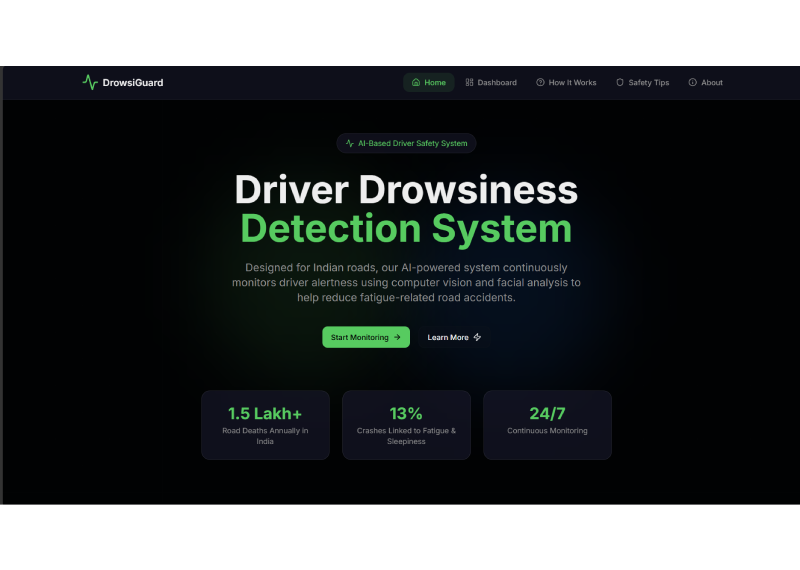
Problem Statement: An AI-based system that detects driver sleepiness through eye monitoring using OpenCV and triggers an alarm to prevent accidents.
Tools used: Python, OpenCV, ML / Deep Learning
Objective: Develop an AI-powered driver drowsiness detection system that monitors eye movements in real time and alerts drivers to prevent fatigue-related accidents.
Insights: Utilized OpenCV and deep learning techniques to detect signs of drowsiness through eye state analysis, enabling real-time monitoring and instant alarm generation for enhanced road safety.
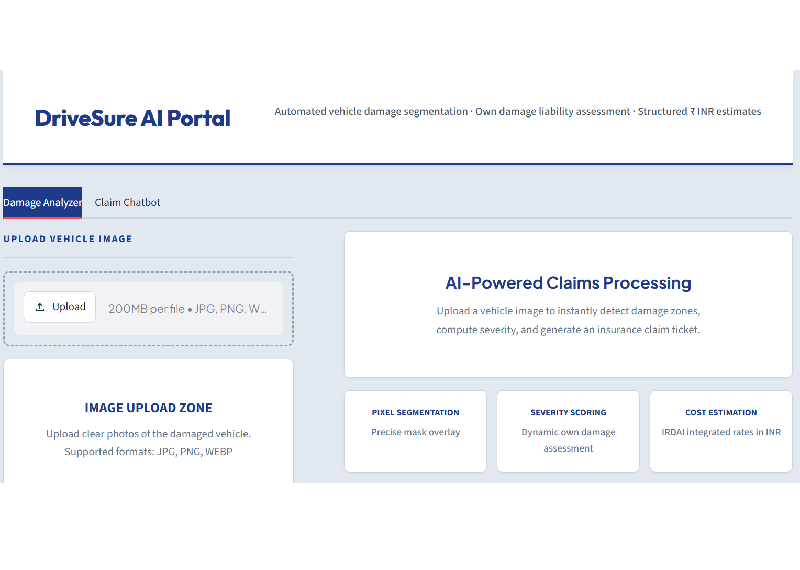
Problem Statement: The Smart Insurance Claim Assistant is an AI-powered system that detects car damages like scratches, dents, and cracks from uploaded images using YOLOv8 and assists users with insurance claim guidance through a chatbot.
Tools used: Python, OpenCV, YOLO V8,ML / Deep Learning, NLP, TensorFlow / PyTorch, NumPy, Pandas, Streamlit
Objective: The primary objective of DriveSure AI is to develop an AI-powered automated car damage assessment system that can accurately detect car damages, estimate their severity, predict repair costs, and streamline the insurance claim process. The project aims to reduce the dependency on manual inspections, accelerate claim settlements, improve assessment consistency, and enhance the
Insights: DriveSure AI demonstrates how Artificial Intelligence and computer vision can automate car damage assessment and insurance claim processing. The system accurately detects car damages, evaluates their severity, and estimates repair costs with minimal human intervention. This significantly reduces claim processing time and improves consistency in damage assessments. The project also enhances customer experience by providing faster and more transparent claim assistance. Furthermore, its local deployment ensures data privacy while delivering efficient and reliable performance.
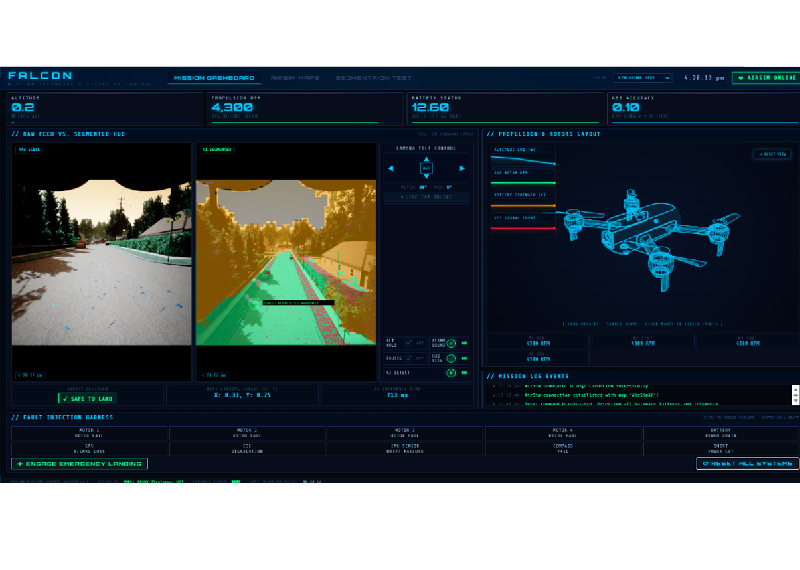
Problem Statement: Drones often crash because they don't realize they are failing until it's too late. Crashes could be avoided if we analyse the failure pattern and train the drone to land in a safe space.
Tools used: Python, OpenCV,YOLO Ultralitics, AirSim, ML / Deep Learning, Pandas,Torch,Transformers,Numpy,Safetensors
Objective: The primary objective of the FALCON project is to develop an intelligent and autonomous emergency landing system for drones that can detect safe landing zones in real time and execute a controlled descent during mid-flight hardware failures. The system aims to improve flight safety by minimizing crashes, protecting property, and reducing risks to human life through AI-driven safe
Insights: The FALCON project highlights how Artificial Intelligence, computer vision, and real-time telemetry can be integrated to significantly enhance drone safety during emergency situations. The project demonstrates that AI models such as SegFormer and YOLO can accurately identify safe landing zones and detect obstacles in real time, enabling autonomous decision-making during hardware failures. Additionally, the use of coordinate smoothing and optimized processing techniques ensures stable and reliable landings even on limited hardware resources. Overall, the project showcases the potential of intelligent autonomous systems to reduce accidents, protect valuable equipment, and improve the safety and reliability of drone operations.
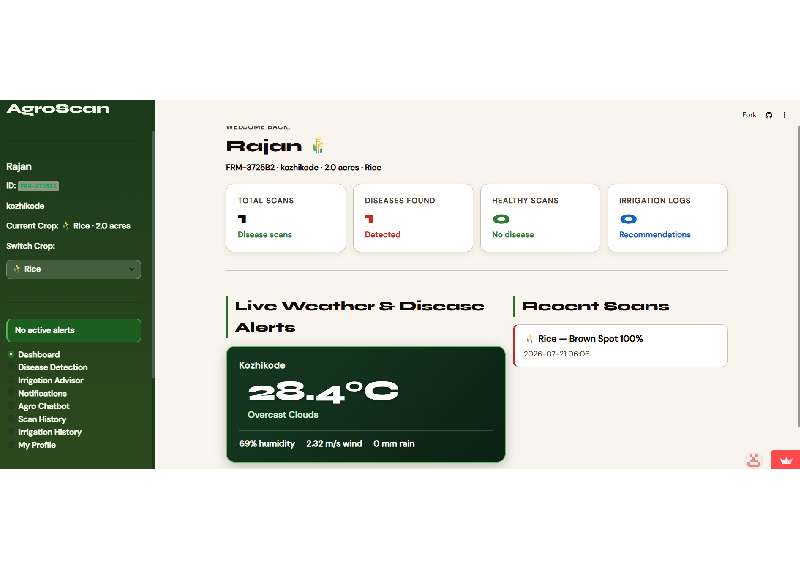
Problem Statement: Delayed crop disease identification and inefficient use of resources reduce farm productivity and long-term agricultural sustainability
Tools used: Python, OpenCV,YOLOv8n,MobileNetV2,Deep Learning, TensorFlow, NumPy, Pandas,Wheather API,Streamlit
Objective: The primary objective of AgroScan is to develop an AI-powered crop disease detection system that can identify plant diseases from leaf images quickly and accurately. The project aims to assist farmers in early disease diagnosis, reduce crop losses, improve productivity, and support informed farming decisions through features such as weather monitoring and an agricultural chatbot.
Insights: AgroScan demonstrates how Artificial Intelligence and Deep Learning can support modern agriculture by enabling early and accurate crop disease detection. The system analyzes leaf images in real time, helping farmers identify diseases before they spread extensively. Early diagnosis can reduce crop losses, minimize unnecessary pesticide usage, and improve overall crop productivity. The integration of weather information and chatbot assistance provides farmers with additional guidance for effective farm management. Overall, the project highlights the potential of AI-driven solutions in promoting smarter and more sustainable agricultural practices.
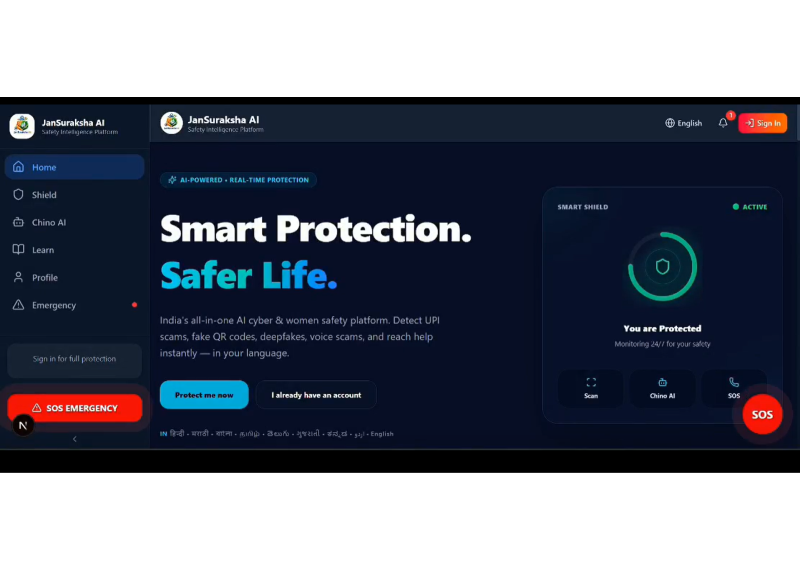
Problem Statement: JanSuraksha AI is an AI-powered Women and Public Safety Intelligence Platform designed to protect citizens from physical threats, cybercrime, scams, emergencies, and safety risks through real-time monitoring, intelligent assistance, and emergency response services.
Tools used: Python,Tensorflow,GAN , Natural Language Processing (NLP), Computer Vision, Deep Learning, QR & URL Analysis, Geolocation Services
Objective: To develop an AI-powered public safety platform that detects cyber threats, prevents online fraud, enhances personal safety through emergency support and safe navigation, and promotes cyber awareness using an intelligent virtual assistant.
Insights: The JanSuraksha AI built an AI-powered safety platform that helps users identify phishing websites, fake QR codes, scam messages, voice fraud, and deepfake content. The system also includes Smart Shield Protection, Emergency SOS, Safe Navigation, Privacy Monitoring, Nearby Emergency Services, and the Chino AI Assistant to improve public safety and enable faster emergency response.
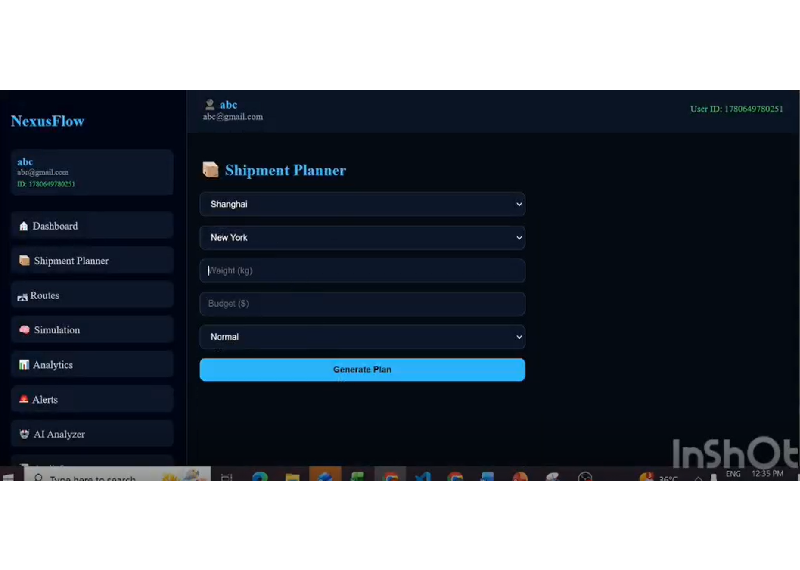
Problem Statement: Traditional shipment planning often overlooks critical factors such as weather conditions, route risks, traffic congestion, and carbon emissions, leading to delays and increased operational costs.There is a need for an AI-powered system that can proactively detect supply chain risks and recommend the safest, fastest, and most sustainable transportation routes in real time.
Tools used: CNN,Yolo,python,GCP,Render,Gemini, LeftNet
Objective: To develop an AI-powered supply chain management system that monitors shipments in real time, predicts potential risks, optimizes transportation routes, and supports smarter logistics decision-making through intelligent analytics and automation.
Insights: Developed an intelligent logistics platform that combines AI and predictive analytics to monitor shipments, detect risks, and recommend optimized routes in real time. The system features live shipment tracking, AI-powered risk detection, interactive dashboards, performance analytics, supply chain simulations, and an AI assistant, enabling organizations to reduce delays, improve operational efficiency, and make faster, data-driven decisions
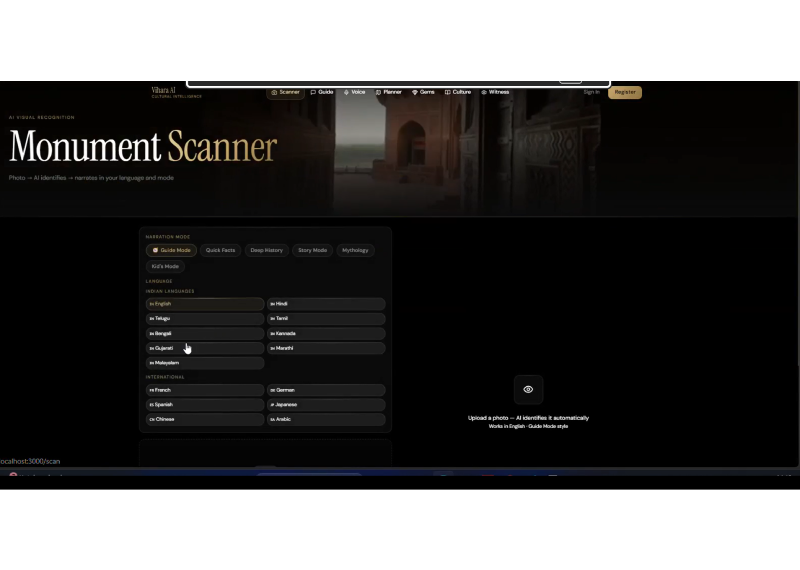
Problem Statement: India's rich heritage and growing tourism industry attract millions of domestic and foreign visitors each year, yet tourists struggle to identify monuments, navigate language barriers, plan trips efficiently and stay safe in overcrowded sites. Existing tourism platforms rely on static information, support only English, and fail to deliver real-time personalized guidance to diverse visitors. This leads to poor tourist experiences, preventable safety incidents and significant loss in India's
Tools used: Python,Machine Learning,DL,React, TypeScript, FastAPI, Python, Groq LLM (Llama 3), Hugging Face Vision AI, SQLite, ChromaDB, Artificial Intelligence (AI), Computer Vision, Natural Language Processing (NLP)
Objective: To develop an AI-powered heritage discovery platform that enables users to identify monuments, explore cultural history through multilingual AI assistance, receive voice-based storytelling, generate personalized travel itineraries, and discover hidden heritage destinations across India.
Insights: Developed a full-stack AI-powered heritage platform that combines Computer Vision, NLP, and Generative AI to recognize monuments, provide multilingual cultural guidance, generate immersive voice narrations, recommend personalized travel plans, and uncover hidden gems. The platform supports 17+ languages and integrates intelligent search, interactive trip planning, and AI-powered storytelling to create an engaging and accessible cultural tourism experience.
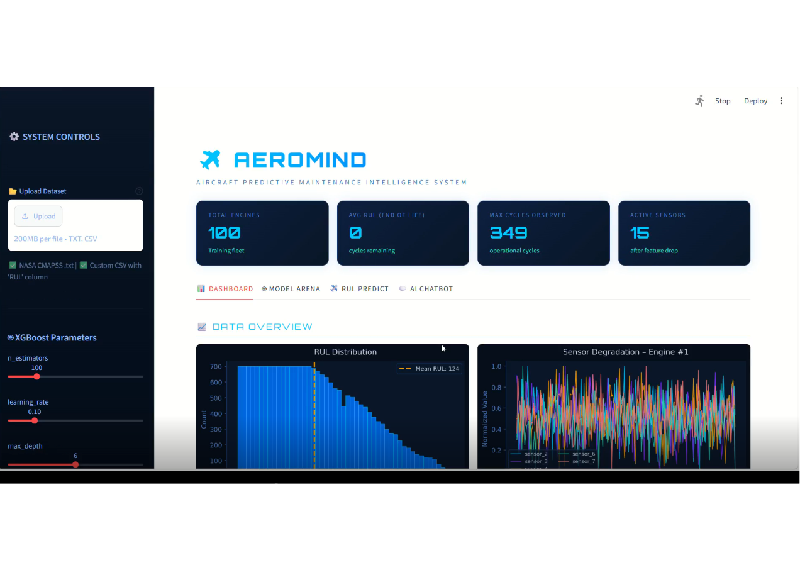
Problem Statement: Aircraft engine failures can cause serious safety risks, flight delays, and high maintenance costs. Traditional maintenance methods are often inefficient because they rely on fixed schedules or repairs after failure occurs. This project aims to predict the Remaining Useful Life (RUL) of aircraft engines using sensor data from the NASA CMAPSS (FD001) dataset. By analyzing engine degradation patterns through Machine Learning and Deep Learning techniques, the system estimates engine health, classifies its condition, and provides timely maintenance recommendations to improve safety,
Tools used: Python,ML,Streamlit,Matplotlib,NLP
Objective: The primary objective of this project is to enhance aircraft safety and reduce maintenance costs by predicting the Remaining Useful Life (RUL) of engines using sensor data from the NASA CMAPSS (FD001) dataset. The system aims to analyze engine degradation patterns through Machine Learning and Deep Learning techniques to estimate engine health and classify its condition. Another key objective is to provide timely maintenance recommendations, enabling airlines to shift from reactive or fixed-
Insights: This project highlights the limitations of traditional maintenance methods, which often rely on fixed schedules or post-failure repairs, leading to inefficiencies and high costs. By leveraging sensor data and advanced predictive models, the system can detect subtle degradation trends that are not visible through conventional inspections. Predicting RUL allows maintenance teams to plan interventions proactively, ensuring safety while avoiding unnecessary downtime. The integration of machine learning and deep learning provides more accurate and adaptive predictions compared to rule-based approaches. Overall, the project demonstrates how data-driven predictive maintenance can transform aviation operations by improving reliability, reducing costs, and preventing catastrophic engine failures.
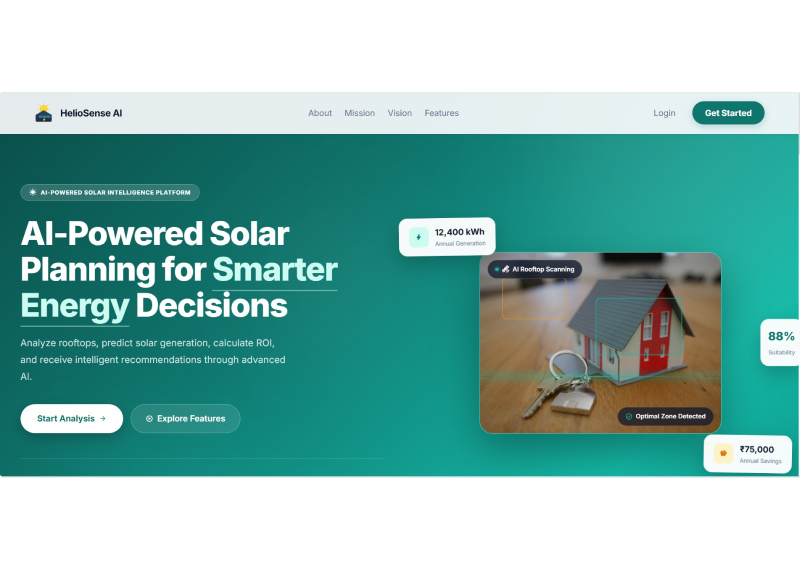
Problem Statement: The Government of India launched the PM Surya Ghar Yojana scheme to provide free electricity to one crore households through rooftop solar installations. However, most homeowners are unaware of how to assess their rooftop's suitability, estimate energy generation, or calculate financial benefits under this scheme. Manual surveys are expensive, time-consuming, and inaccessible to common users, especially in rural and semi-urban areas. HelioSense AI addresses this gap by providing an intelligent, automated platform that simplifies rooftop solar assessment, predicts energy generation, analyzes
Tools used: Python,ML,Flask,HTML,Deeplearning
Objective: The main objective of HelioSense AI is to simplify and accelerate rooftop solar adoption for Indian households under the PM Surya Ghar Yojana. The system aims to provide an intelligent, automated platform that helps users assess rooftop suitability, predict energy generation, and calculate financial benefits without the need for costly manual surveys. Another objective is to make solar adoption accessible to rural and semi-urban communities by offering easy-to-understand analysis of electricity
Insights: The project highlights a critical gap between government initiatives and public awareness, where most homeowners lack the tools to evaluate solar feasibility. Manual surveys are not only expensive and time-consuming but also inaccessible to common users, especially in underserved regions. HelioSense AI bridges this gap by automating rooftop assessment and energy prediction, making the process faster, cheaper, and more reliable. The integration of subsidy guidance ensures that users can maximize financial benefits, while bill analysis provides clarity on long-term savings. By lowering barriers to entry, the system encourages widespread solar adoption, supports sustainability goals, and empowers households to actively participate in India’s renewable energy transition.
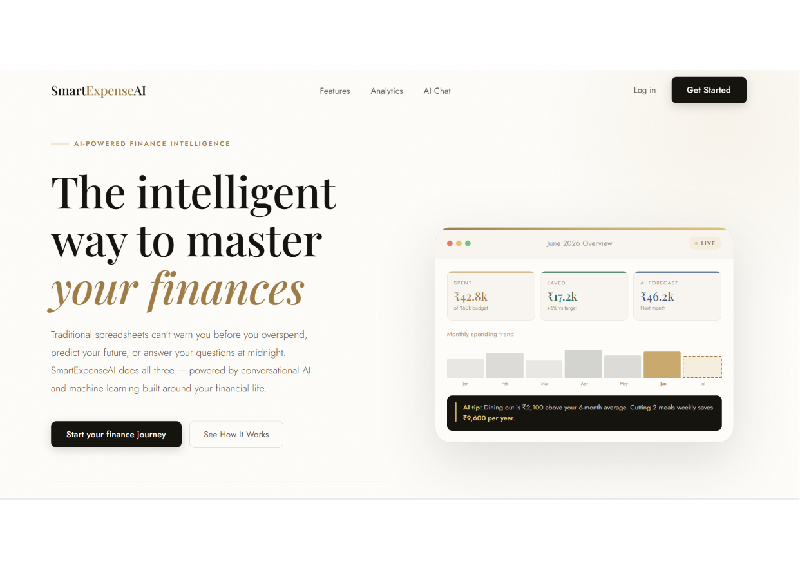
Problem Statement: Managing personal finances is one of the most important life skills, yet most people find it difficult. Traditional methods such as pen-and-paper records or basic spreadsheets are slow, error-prone, and give no intelligent insights. The Expense Tracker with Financial Assistant Chatbot is an intelligent web-based financial management system built with Python Flask. It allows users to record, organise, and analyse their daily and monthly income and expenses through an easy-to-use
Tools used: Python,Numpy,Pandas,ML,Flask,HTML,SQL,NLP
Objective: The primary objective of the Expense Tracker with Financial Assistant Chatbot is to simplify personal financial management by providing a user-friendly web-based platform where individuals can record, organize, and analyze their income and expenses. The system aims to enhance transparency through interactive dashboards and reports that clearly highlight spending patterns and savings.
Insights: The project highlights the limitations of traditional financial management methods such as pen-and-paper records or static spreadsheets, which are often slow, error-prone, and lack intelligent insights. By leveraging modern web technologies and machine learning, the system transforms financial tracking into a proactive planning tool. The chatbot integration makes financial management conversational and accessible, reducing the intimidation often associated with budgeting. Predictive analytics provide users with foresight into their spending habits, enabling them to anticipate risks and adjust behavior accordingly. Visualizing savings trends motivates users to cultivate better financial habits, while overspending alerts act as early warnings to prevent financial stress. Overall, the system demonstrates how technology can shift financial management from passive record-keeping to intelligent, interactive, and personalized guidance.
Problem Statement: Energy demand fluctuates due to weather, economic activity, and consumer behavior. Utilities struggle to balance supply and demand, leading to inefficiencies.Individuals lack accessible and personalized financial guidance, leading to poor investment decisions and ineffective financial planning, highlighting the need for an AI-based virtual financial advisor
Tools used: PYTHON,PANDAS,NUMPY,MATPLO TLIB,CSV/EXCEL FILES/Time Series/Keras/Tensorflow/STREAMLIT
Objective: Provide Personalized Financial Guidance ,Enable Risk Classification,Real-Time Data Analysis
Insights: Many individuals do not have access to professional financial advisors because of cost, lack of awareness, or limited availability.
Problem Statement: Imagine a family receiving their electricity bill at the end of the month. They’re shocked — the amount is far higher than expected.
The truth is, they never really knew how much electricity they were using day to day. Without clear awareness, small habits like leaving appliances on or ignoring energy-saving tips quietly add up.
Manual monitoring is tedious and often ignored, so bills keep rising. What they lack is a simple, smart way to understand and manage their energy usage before it becomes a costly surprise
Tools used: MS COPILOT STUDIO
Objective: Estimate Monthly Electricity Consumption,Predict Electricity Bill Amount,Create Awareness of Energy Usage,Create Awareness of Energy Usage
Insights: Most families only realize their electricity usage after receiving the monthly bill, when it is too late to control expenses.
Small daily habits, such as leaving lights, fans, chargers, TVs, or appliances switched on unnecessarily, can significantly increase electricity consumption over time.
Problem Statement: Factories run nonstop… yet managers rely on manual logs and scattered spreadsheets to track massive energy use.
Hidden energy drains… peak demand charges from machines go unnoticed, driving costs higher.
The missing intelligence… no real-time system exists to monitor, analyze, and optimize energy consumption, leading to inefficiency and poor sustainability
Tools used: POWER BI
Objective: Monitor Energy Consumption,Identify High Energy-Consuming Equipment,Detect Energy Wastage,Analyze Peak Demand
Insights: Factories often depend on manual logs and separate spreadsheets, making it difficult to get a clear view of total energy use.
Energy consumption can vary across machines, shifts, departments, and production processes, but these variations may remain unnoticed without proper tracking.
Idle machines, poorly maintained equipment, air leaks, overheating motors, and unnecessary lighting can create hidden energy wastage.
Problem Statement: Organizations struggle to extract insights from raw data due to "Analytical Friction" - the gap between data collection and accurate visualization.
Aerospace utilizes Pandas, Statistics, and Seaborn to automate this pipeline, transforming messy datasets into high-speed, statistically validated visual reports.
Tools used: Python, Pandas, Stats, Seaborn
Objective: Organizations often hit a wall called "Analytical Friction"—the tough gap between collecting raw data and turning it into clear visuals. Aerospace fixes this with Pandas, stats, and Seaborn, automatically converting messy data into fast, reliable visual reports you can trust
Insights: Aerospace removes the friction between raw data and meaningful insights by automating analysis, validating statistics, and generating publication-ready visualizations, enabling decisions at the speed of data.
Problem Statement: This project focuses on developing an AI-based automotive chatbot that can understand user questions and provide instant and accurate responses related to vehicle information, maintenance tips, servicing guidance, and basic problem explanation. The chatbot helps users save time and improves vehicle support.
Tools used: MS Copilot Studio
Objective: The chatbot works 24×7, reduces dependency on service centers, and improves customer support in the automotive industry
Insights: "Vehicle owners often struggle to find reliable maintenance advice and quick troubleshooting solutions. This AI chatbot bridges that gap by providing real-time, personalized automotive guidance in just a few seconds."
Problem Statement: Food spoilage is a major global problem affecting health, economy, and sustainability.
Tools used: Python, Pandas, Stats, Seaborn, Matplotlib
Objective: The system helps in food safety and food waste reduction by providing a quick, visual-based assessment of food quality using Artificial Intelligence.
Insights: Food spoilage leads to significant economic losses, health risks, and environmental waste.
AI and computer vision can accurately assess food freshness by analyzing visual characteristics.
Early detection of spoiled food helps prevent foodborne illnesses and improves consumer safety.
Automated freshness detection reduces manual inspection efforts and increases accuracy.
The system supports households, restaurants, supermarkets, and the food supply chain in minimizing waste.
AI-driven food quality assessment promotes sustainable consumption and efficient food resource management.